
4 Surprising Factors That Can Affect a Home Appraisal in Toronto and the GTA
Two homes on the same Leslieville block. Same square footage. Same lot size. Same number of bedrooms. One appraises at $1.28 million. The other at $1.19 million. The $90,000 gap isn’t a mistake — it’s the quiet work of factors most homeowners never think about.
If you’re a homeowner in Toronto or the GTA considering selling, refinancing, or simply curious about what your home is actually worth, it helps to understand what moves the number on an appraisal report. According to TRREB, the average GTA home sold for $1,017,796 in March 2026, with the composite benchmark price at $941,800. But averages hide a lot. The same property type can swing tens of thousands of dollars in either direction based on details that a surface-level online estimate will never catch.
Below are four surprising factors that can affect a home appraisal — the ones our team at IPS sees shift values most often when we complete a professional home appraisal in Toronto. None of them are about square footage. All of them are worth knowing before you list, refinance, or challenge a valuation.
Factor 1: Curb Appeal Moves More Value Than Most Homeowners Expect
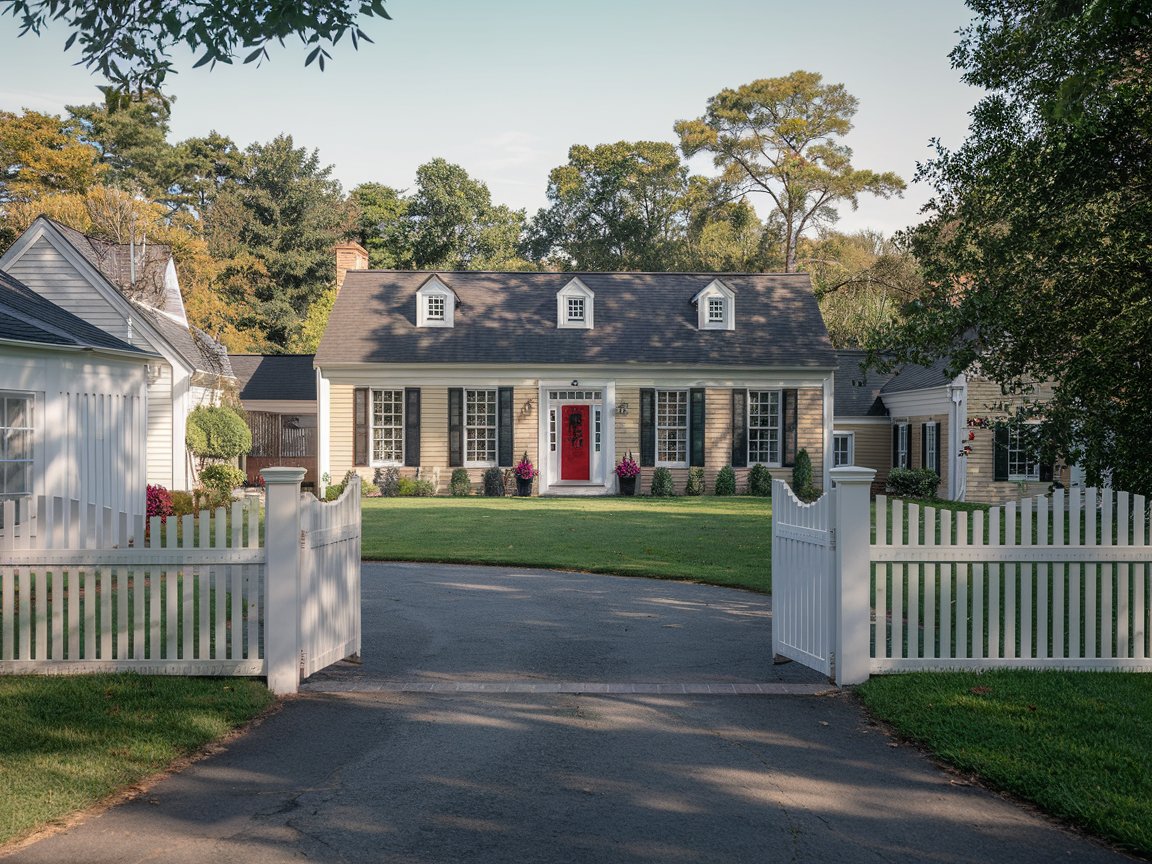
Buyers form an impression of your home within seconds of pulling up to the curb. Appraisers are trained to be objective, but they’re working with comparable sales that reflect how those buyers behaved.
What Appraisers Actually Look For at the Curb
Landscaping, front-door condition, roof line visible from the street, driveway condition, siding and trim, fencing, and the overall impression of maintenance all factor into the condition rating an appraiser assigns your property. Research published in The Journal of Real Estate Finance and Economics found that homes with strong curb appeal sell for roughly 7% more than comparable homes with neglected exteriors. On a $1.2 million detached home in North York, that’s an $84,000 swing — for landscaping and paint.
A Recent IPS Example from The Beaches
Our team recently completed a residential property valuation on a detached home in The Beaches where the owner had invested roughly $9,000 in curb appeal ahead of listing: new front door, refreshed landscaping, repainted trim, and repaired walkway. Two comparables on the same street without similar presentation appraised about 4% lower on a per-square-foot basis. The investment paid for itself several times over.
If you’re preparing for a valuation, our guide on how to prepare your home for an appraisal walks through what’s worth doing in the final two weeks.
Factor 2: Your Neighborhood — And What’s Coming to It
Location is not just where your home sits today. It’s where your neighborhood is going tomorrow. Few things illustrate that more clearly than what’s happening across Toronto’s transit map.
Why Your Postal Code Can Add Six Figures
Pricing across the GTA is not uniform. TRREB’s March 2026 data shows detached homes in Toronto Central averaging $2,238,951 while Toronto East averaged $1,162,815 — a difference of more than a million dollars, driven largely by neighborhood. Within specific pockets the gap grows wider. Homes in areas like Riverdale or Hoggs Hollow carry a premium that even renovated properties in Scarborough or Etobicoke South rarely match, regardless of interior quality.
Our team accounts for these micro-market differences by weighting comparable sales within tight geographic boundaries. A sale three kilometres away on the wrong side of a major arterial can be a poor comparable even if the home looks similar on paper. For a deeper look, our resource on local market trends in the GTA breaks down how micro-markets behave differently inside the same city.
Transit Expansion Is Rewriting Toronto’s Value Map
The Ontario Line alone will add 15 stations across 15.6 kilometres when it opens in 2031, connecting Exhibition Place to Don Mills. The Yonge North Subway Extension, Scarborough Subway Extension, and Eglinton Crosstown West Extension are all advancing. Every one of these projects changes the effective commute radius for tens of thousands of buyers — and appraisers are watching.
We recently appraised a detached bungalow in East York where proximity to a future Ontario Line station had already shifted comparable sale prices meaningfully above similar properties just six blocks further east. This is not theoretical: the Metrolinx-backed CMHC research on transit-oriented development shows corridor properties capturing premiums well before stations open. We cover this in depth in our analysis of how new transit projects affect nearby property values.
Factor 3: The Home Systems Nobody Sees
Homeowners tend to focus on kitchens and bathrooms — the visible upgrades. But appraisers spend as much time thinking about what’s behind the walls and above the ceiling as they do about finishes.
Roof, HVAC, Electrical, and Plumbing Carry More Weight Than You Think
A home with a 25-year-old roof, knob-and-tube wiring, and an original 1980s furnace carries real marketability concerns. Lenders flag them. Insurers flag them. Buyers flag them. Industry data suggests a new HVAC system alone can lift home value by 5% to 7%, with an ROI of roughly 30% on the installation cost. Updated electrical panels, a newer roof (under 10 years), and modern plumbing all reduce buyer risk — which is exactly what appraisers are asked to measure.
Why Cosmetic and Structural Upgrades Are Weighted Differently
A $40,000 kitchen renovation does not automatically add $40,000 to your appraised value. A $15,000 roof replacement, by contrast, often closes a gap that would have otherwise dragged the home below comparables. Our team has completed assessments in Vaughan, Markham, and Etobicoke where aging systems cost owners more at appraisal than dated kitchens ever did — because deferred maintenance shows up as a condition adjustment on every single comparable the appraiser reviews.
If you’re planning upgrades specifically to improve a future appraisal, prioritize the systems before the surfaces.
Curious what your Toronto home is actually worth?
IPS Realty Appraisals delivers AACI-designated home appraisals across Toronto and the GTA, typically within 5–10 business days of inspection. Every report is prepared to the standards of the Appraisal Institute of Canada and is accepted by major lenders, the CRA, and the courts.
👉 Get a Free Appraisal Quote 📞 Call +1 (437) 908-0098
Factor 4: Market Conditions on the Exact Date of Your Appraisal
An appraisal is a snapshot of a specific date. Shift the date by three months in either direction and the number can change meaningfully — even if nothing about your house has changed.
Days on Market, Sale-to-List Ratios, and Comparable Sales
In March 2026, TRREB reported the average GTA property spent 47 days on the market, up from 36 days a year earlier. The sale price-to-list price ratio settled at 98%, meaning buyers were negotiating roughly 2% below asking. Both metrics feed directly into how our team weights comparable sales. A home that sold in a frenzied February 2022 multiple-offer environment is a poor comparable for a 2026 appraisal — even if it’s literally the house next door.
Why the Same Home Can Appraise Differently in Spring vs. Fall
CMHC’s 2026 Housing Market Outlook forecasts a muted first half of the year with a potential tightening in the back half, particularly if consumer confidence strengthens. TRREB’s own 2026 forecast range for the GTA average sits between $1 million and $1.03 million. An appraisal completed in April 2026 and an appraisal of the same home in November 2026 may land on different numbers purely because the market moved. This is why we always work to the effective date the client needs — whether that’s today, a past date for capital gains, or a specific point for estate purposes. Our deep-dive on current Toronto home price trends covers where the market is heading in more detail.
Why These Four Factors Actually Work Together
Curb appeal, neighborhood, home systems, and market conditions are not independent levers. They compound. A well-maintained home in an improving transit corridor with recent mechanical upgrades, appraised in a tightening market, will land significantly higher than the same structure with deferred maintenance in a slowing neighborhood. Understanding the 4 surprising factors that can affect a home appraisal is what turns a guess into a defensible valuation.
Get a Professional Home Appraisal You Can Stand Behind
A home appraisal is more than a single number on a report. It’s a defensible, market-supported valuation that affects your financing, your tax position, your estate planning, and your negotiating power. The factors above are the ones most homeowners miss — and the ones that quietly move values by tens of thousands of dollars across the GTA every month. When the valuation has to hold up in front of a lender, the CRA, or a court, the quality of the appraiser matters more than the price of the report.
👉 Request a free home appraisal quote 🏡 Learn more about our home price valuation service
6. Frequently Asked Questions
- What is a home appraisal and how is it different from a home inspection? A home appraisal is an independent, professional opinion of a property’s fair market value, completed by a designated appraiser for financing, legal, tax, or estate purposes. A home inspection, by contrast, evaluates the physical condition of the property — roof, plumbing, electrical, HVAC — and flags defects. An appraisal answers what is this worth? An inspection answers what needs fixing?
- How does a home appraisal differ from MPAC’s property assessment? MPAC uses a mass-appraisal model to assess over 5 million Ontario properties for tax purposes, and current values are still tied to a January 2016 valuation date. A professional appraisal reflects today’s market, uses current comparable sales, and is prepared for a specific intended use like financing or capital gains. For a full comparison, see our guide on the difference between a home appraisal and a property assessment.
- How much does a home appraisal cost in Toronto and the GTA? Residential home appraisal fees in Toronto typically range from roughly $700 to $1,500, depending on property type, size, location, complexity, and intended use. Straightforward urban condos and bungalows sit at the lower end; larger detached homes, custom builds, and retrospective valuations for capital gains or estate purposes cost more. IPS provides a written quote before any work begins.
- How long does a home appraisal take? The on-site inspection typically lasts 45 minutes to 90 minutes for a standard residential property. The full report is generally delivered within 5–10 business days of the inspection. Urgent timelines can often be accommodated for refinancing or legal deadlines — let us know when you book.
- Can curb appeal really affect my home’s appraised value? Yes. Research in The Journal of Real Estate Finance and Economics found curb appeal can influence sale prices by up to 7%, and appraisers account for it through the condition rating and by selecting comparable sales with similar presentation. On a typical GTA home, that’s tens of thousands of dollars tied to landscaping, paint, and front-door condition.
- Does IPS appraise homes outside the City of Toronto? Yes. Our team appraises homes across the GTA including Mississauga, Vaughan, Markham, Richmond Hill, Oakville, Scarborough, Etobicoke, East Gwillimbury, and throughout the surrounding regions. Every appraisal is completed under the oversight of Ehsan Hassani, P.App., AACI, P.Eng., R/W-AC, MBA.
7. Closing Author Line
This article was written and reviewed by Ehsan Hassani, a designated AACI appraiser and member of the Appraisal Institute of Canada, with extensive experience appraising homes across the Toronto and GTA market.


