

Expropriation Appraisal Services in Toronto and the GTA

Expropriation Valuations · Ontario

Independent R/W-AC Valuations for Section 25 Review, Injurious Affection Claims, and Ontario Land Tribunal Support

When a statutory authority registers a Plan of Expropriation against your property, the clock starts. Under Section 25 of Ontario's Expropriations Act, R.S.O. 1990, c. E.26, the expropriating authority has three months to serve you with a formal offer of compensation based on their own appraisal report. The offer reflects their number. Not yours.

Major GTA Projects — 2026

The Ontario Line
The Eglinton Crosstown West Extension
Highway 413
The Yonge North Subway Extension
The Scarborough Subway Extension
The Bowmanville GO Extension

The province's 10-year, $210-billion capital plan is moving more GTA land through the expropriation process in 2026 than at any point in the past decade — and much of that land sits in Toronto, Mississauga, Vaughan, Markham, Richmond Hill, Oakville, and Etobicoke.

At IPS Realty Appraisals, our team prepares independent expropriation valuations that give property owners, their lawyers, and their business advisors the evidence needed to respond to a Section 25 Offer.

Ehsan Hassani – IPS

Ehsan Hassani

P.App · AACI · P.Eng · R/W-AC · MBA

Our work is led and reviewed by Ehsan Hassani, whose R/W-AC (Right-of-Way Appraisal Cross Certification) credential is one of the few Canadian designations specifically focused on the valuation principles that apply to expropriation, partial takings, and injurious affection.

GTA Property Expropriation
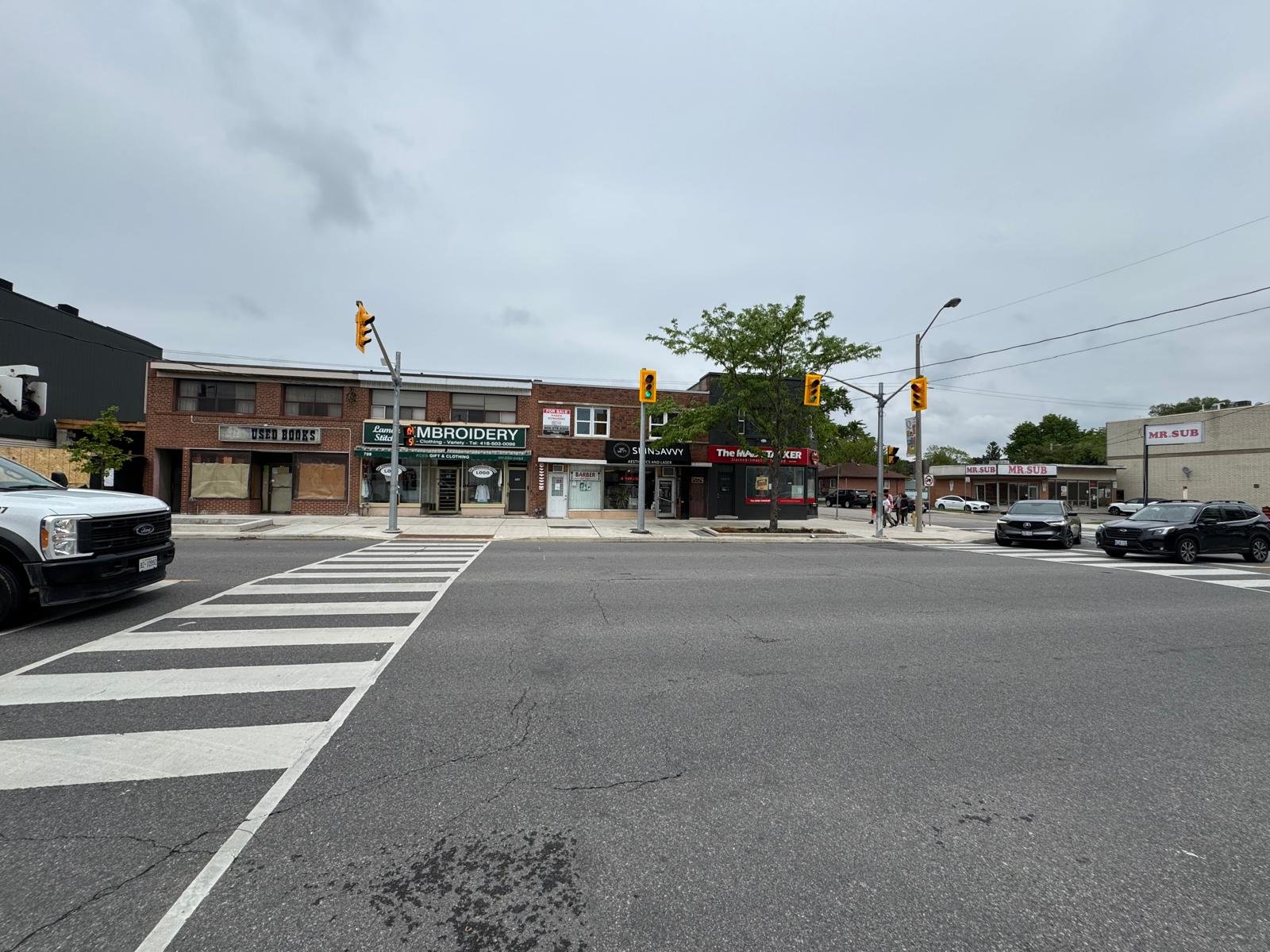
706 The Queensway, Etobicoke
Key Legislation

Section 25 of Ontario's Expropriations Act, R.S.O. 1990, c. E.26 — 3-month window to respond to a formal compensation offer.

Request an Independent Valuation

Have you received a Section 25 Offer? We can help you respond.

    Confidential · We respond within one business day

    Legal Framework · Ontario

    Expropriation in Ontario: The Legal Framework

    GTA Expropriation Legal Framework
    Ontario · GTA
    Expropriations Act · R.S.O. 1990, c. E.26

    As of 2021, expropriation compensation hearings are administered through the Ontario Land Tribunal (OLT), which replaced the former Ontario Municipal Board for compensation hearings and Hearings of Necessity.

    Expropriation in Ontario is governed by the Expropriations Act and administered through the Ontario Land Tribunal (OLT). Each expropriating authority has statutory power to acquire land without owner consent for projects deemed to serve a public purpose.

    Once the Plan is registered, the authority generally takes title within months. What remains in dispute — almost always — is compensation.

    Province of Ontario

    Metrolinx

    Infrastructure Ontario

    City of Toronto

    York Region

    Peel Region

    Durham Region

    Halton Region

    TTC

    Hydro One

    Utility Corridors

    01

    Notice of Application

    Application for Approval to Expropriate

    02

    Approval

    Statutory authority approval granted

    03

    Plan Registered

    Plan of Expropriation registered

    04

    Section 25 Offer

    Formal compensation offer served within 3 months

    05

    Negotiation or Arbitration

    OLT hearing if compensation disputed

    Once the Plan is registered, the authority generally takes title within months. What remains in dispute — almost always — is compensation.

    Section 25 · Expropriations Act

    What Section 25 Actually Requires

    Section 25 requires the expropriating authority to serve the registered owner with:
    01

    Statement of Total Compensation

    A statement of total compensation being offered for all interests in the land.

    02

    Immediate Payment of 100% Market Value

    Immediate payment of 100% of the market value of the land as estimated by the authority.

    03

    Copy of the Appraisal Report

    A copy of the appraisal report that supports the offer.

    The payment is made without prejudice to the owner's right to claim additional compensation under the Act. Accepting the Section 25 advance does not settle the claim; it simply releases the authority's estimated market value to the owner while negotiations continue.

    Accepting the Section 25 advance does not settle the claim. It simply releases the authority's estimated market value to the owner while negotiations continue.

    Why This Moment Matters

    This is the moment when an independent valuation matters most. The appraisal report served with the Section 25 Offer is prepared for the authority — it reflects their position. A property owner who responds without their own defensible valuation is negotiating from the authority's evidence alone.

    +1 (437) 908-0098
    Speak with Ehsan Hassani, P.App., AACI, R/W-AC Request an independent expropriation valuation — confidential consultation

    Section 13 · Expropriations Act

    The Four Heads of Compensation Under the Expropriations Act

    A defensible claim under the Expropriations Act is built on the four compensable categories set out in Section 13. Each requires a different analytical approach, and the expropriating authority's initial offer frequently under-addresses two or three of them.

    Head 01

    Market Value of the Land Taken

    Market value is the amount the land might be expected to realize if sold on the open market by a willing seller to a willing buyer, determined as of the valuation date. The Act requires valuation based on highest and best use, and expressly directs the appraiser to disregard any value increase (or decrease) caused by the expropriation itself or the public scheme that led to it. This "scheme principle" is the single most technical element of expropriation valuation and separates expropriation work from ordinary market appraisal.

    Head 02

    Disturbance Damages

    Disturbance damages compensate for the costs reasonably incurred as a result of the taking. Depending on the property, these can include moving expenses, reasonable legal and appraisal costs, business relocation, tenant fit-up, signage replacement, loss of goodwill elements, and professional advisory fees. For commercial and industrial owners, disturbance damages often exceed the value of the land itself.

    Head 03

    Damages for Injurious Affection

    Injurious affection compensates for the reduction in value caused to the remaining land when only part of a property is taken — or, in more limited circumstances, where no land is taken but adjacent works reduce the value or utility of nearby property. A partial taking that leaves a remnant with compromised access, reduced frontage, awkward site geometry, or proximity to a new rail corridor can trigger substantial injurious affection damages.

    Head 04

    Special Difficulties in Relocation

    Where the owner faces unusual difficulty in relocating — typical for residential owners tied to a specific community or businesses with location-specific customer bases — additional compensation may be payable. The Act gives tribunals the discretion to grant amounts necessary to enable the owner to relocate to equivalent accommodation.

    Each of these categories requires independent analysis. Our reports address them individually rather than folding everything into a single market-value figure.

    Served With a Section 25 Offer?

    You have the right to your own independent appraisal before accepting.

    Reasonable appraisal costs are recoverable from the expropriating authority under the Act. Our R/W-AC credentialed team can review the authority's report and prepare a defensible counter-valuation.

    Request an Appraisal Quote +1 (437) 908-0098

    Confidential · R/W-AC Credentialed Team

    Right-of-Way Credential

    Why the R/W-AC Credential Matters

    The R/W-AC (Right-of-Way Appraisal Cross Certification) is granted by the International Right of Way Association (IRWA), the leading professional body for right-of-way and expropriation practitioners across North America.

    It requires prior appraisal designation, specialized coursework in partial taking methodology, injurious affection analysis, and the valuation principles that apply when a public authority acquires property.

    Credential · IRWA

    R/W-AC

    Right-of-Way Appraisal Cross Certification

    International Right of Way Association Leading professional body for expropriation practitioners across North America
    AACI Designated
    R/W-AC Certified
    P.Eng. Engineering
    MBA · Business
    Reason 01

    Methodology

    Partial takings, scheme principle adjustments, before-and-after valuation, and remnant analysis follow specific protocols that are not part of standard residential or commercial appraisal practice.

    Reason 02

    Cross-examination

    Where a file moves to the Ontario Land Tribunal, opposing counsel will test the appraiser's qualifications. R/W-AC designation signals that the valuator has been trained and tested in expropriation-specific standards.

    Reason 03

    Report Structure

    The Act requires valuations to address heads of compensation individually. A report prepared by an R/W-AC holder is structured to the framework tribunals expect to see.

    Ehsan Hassani – IPS

    Ehsan Hassani

    P.App · AACI · P.Eng · R/W-AC · MBA

    At IPS, expropriation work combines Ehsan Hassani's AACI designation (the highest Canadian credential for commercial valuation), R/W-AC certification, and P.Eng. engineering background — relevant where land taken for rail corridors, highways, and utility easements involves technical site considerations.

    Expropriation Services

    Types of Takings We Handle

    Not every expropriation is a full acquisition. In fact, partial takings are more common across the GTA's current transit and infrastructure pipeline. Our team appraises:

    01

    Full Takings

    The entire property is acquired. Common for properties sitting directly on a planned station box, tunnel portal, or highway alignment.

    02

    Partial Takings

    A strip of frontage, rear yard, corner of the lot, or subsurface volume is acquired. The before-and-after valuation, plus injurious affection to the remnant, drives the compensation calculation.

    03

    Permanent Easements

    Rights over the land are acquired without title changing hands. The owner retains underlying ownership but loses specific use rights. Utility corridors, TTC subway easements, and Metrolinx rail corridors generate many of these files.

    04

    Temporary Easements

    Rights to use the land during construction. Common on Eglinton Crosstown West Extension and Ontario Line adjacent sites.

    05

    Subsurface Acquisitions

    Tunnel easements and underground rights taken beneath properties along subway alignments.

    06

    Injurious Affection

    Claims arising from adjacent public works that reduce a property's value without any acquisition. These cases have strict statutory time limits and specific evidentiary requirements.

    Case Scenarios

    Anonymized Case Scenarios

    A closer look at how IPS has helped property owners across the GTA navigate expropriation — and secure the full compensation they were entitled to.

    Partial Taking 01
    Transit Expansion — Vaughan

    Partial Taking for Transit Expansion

    A commercial landowner in Vaughan faced a partial taking of roadside frontage for a transit corridor widening. The authority's Section 25 Offer addressed the land taken but under-valued injurious affection to the remnant, where reduced sightlines and compromised ingress affected marketability.

    Outcome

    Our before-and-after analysis documented the remnant's loss in market value separately from the land taken. The revised compensation addressed both heads.

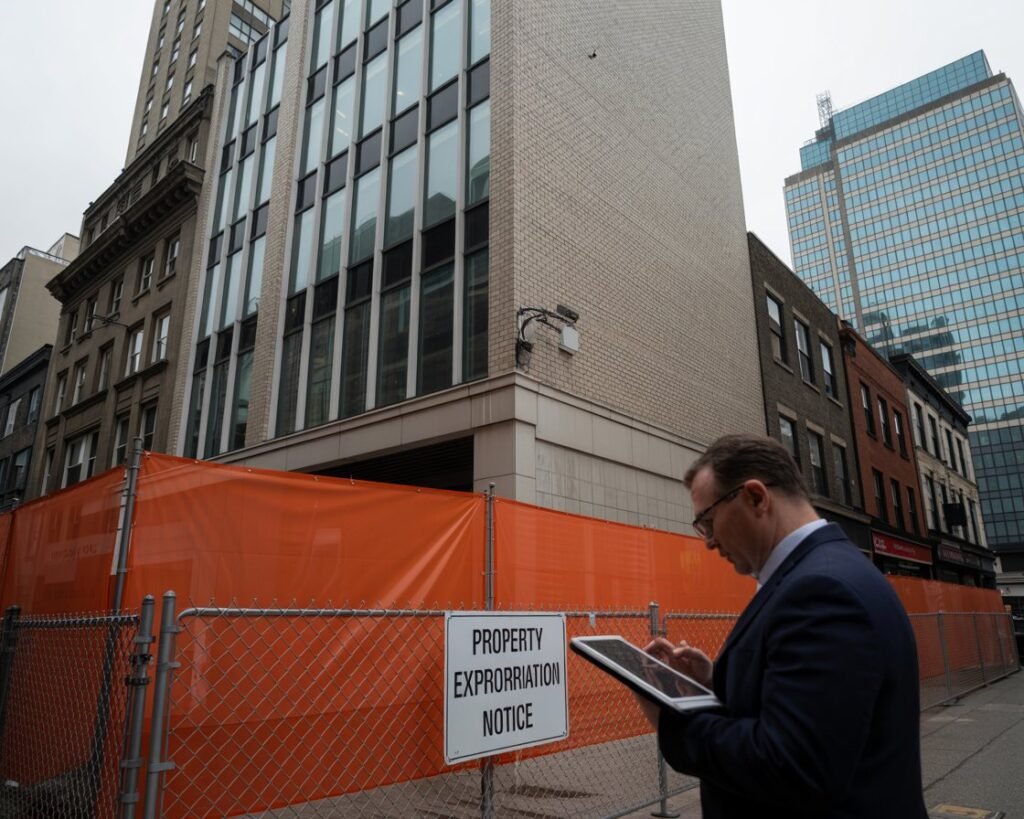
    Residential 02
    Remnant Impact — East Gwillimbury

    Residential Remnant Impact

    A residential owner along a Highway 413 corridor received a Section 25 Offer reflecting the strip of land taken, but no injurious affection allowance for the remaining home now sitting substantially closer to a planned traffic lane.

    Outcome

    Our report quantified the reduction in value to the remnant dwelling based on comparable sales of homes with similar proximity characteristics.

    Full Taking 03
    Scarborough Subway Extension Corridor

    Commercial Full Taking

    An industrial property on the Scarborough Subway Extension alignment was fully acquired. The authority's valuation captured market value of the land and improvements but did not adequately address disturbance damages — specifically the business relocation costs, fit-up expenses for a comparable industrial space, and the reasonable period during which operations would be disrupted.

    Outcome

    Our valuation worked alongside the owner's business loss valuator to document the full compensation claim under Section 13.

    Our Reports

    What's in an IPS Expropriation Appraisal Report

    Our reports are prepared under the Canadian Uniform Standards of Professional Appraisal Practice (CUSPAP) and structured to the evidentiary framework the Ontario Land Tribunal expects.

    01

    Identification of the subject property, rights taken, and valuation date per the Plan of Expropriation

    02

    Highest and best use analysis, disregarding the scheme

    03

    Market value of the land taken, supported by comparable sale evidence

    04

    Before-and-after analysis for partial takings

    05

    Quantification of injurious affection to the remnant

    06

    Identification of disturbance damages categories, coordinated with the owner's business loss valuator or accountant where applicable

    07

    Documentation of comparable sales, valuation methodology, and the reasoning behind each adjustment

    "The report is prepared to be served, defended, and — where necessary — entered into evidence."

    Every IPS appraisal is CUSPAP-compliant and built to withstand scrutiny at the Ontario Land Tribunal.

    CUSPAP Compliant OLT Ready Section 13 Aligned
    Collaboration

    Working With Expropriation Counsel

    Most expropriation files involve legal counsel from the outset. Our team regularly works alongside:

    Expropriation Lawyers

    On the owner's side

    Business Loss Valuators & Forensic Accountants

    For commercial disturbance damages

    Planners & Engineers

    On highest-and-best-use and site development questions

    Tax Advisors

    On capital gains implications of expropriation proceeds

    Where required, we support counsel through the Ontario Land Tribunal process — from initial pleadings through documentary discovery, examinations, and, where it comes to it, expert evidence at the hearing.

    The Act entitles a successful owner to recover reasonable legal and appraisal costs from the authority where the tribunal awards compensation at or above 85% of the Section 25 Offer.

    Pricing

    Expropriation Appraisal Cost in Toronto

    Fees reflect complexity, not property value.

    01

    Residential Partial Takings

    $2,500 – $6,000

    Depending on property type, complexity of the remnant analysis, and whether injurious affection is contested

    02

    Full Residential Takings

    $1,500 – $4,000

    For standard detached and semi-detached homes

    03

    Commercial & Industrial Takings

    $5,000 – $15,000+

    Depending on property class, income complexity, and tribunal involvement

    04

    Easement Valuations & No-Land-Taken Claims

    $3,500 – $10,000+

    Injurious affection claims with strict statutory time limits and specific evidentiary requirements

    A key point many owners miss

    Reasonable appraisal costs actually incurred for the purpose of determining compensation are recoverable from the expropriating authority under the Act, provided the Notice of Application has been served. In most settled files, the authority pays. In arbitrated files, owners who achieve at least 85% of the Section 25 Offer recover costs on a full-indemnity basis.

    Timing

    When to Engage an Independent Appraiser

    Timing matters. The right moment depends on where your file sits in the process.

    1. On Receipt of a Notice of Application for Approval to Expropriate

      This is the statutory trigger that makes reasonable appraisal costs reimbursable. Engaging an appraiser immediately puts you in position before the authority's valuation is served.

      Statutory Trigger
    2. On Receipt of the Section 25 Offer

      If you haven't already engaged counsel and an appraiser, this is the latest reasonable moment. The Offer includes the authority's appraisal report, and you need your own to respond effectively.

      Latest Reasonable Moment
    3. Before Agreeing to Any Permanent Easement or Partial Acquisition Terms

      Once an agreement is signed, your ability to revisit compensation is extremely limited.

      Before Signing
    4. On Discovery of Injurious Affection Where No Land Has Been Taken

      Claims have strict statutory notice periods. Don't wait.

      Time-Sensitive

    For scenarios involving the interaction of expropriation proceeds with tax planning, our resource on capital gains implications provides useful context. Read the guide →

    Our Edge

    Why Property Owners Across the GTA Work With IPS

    Four factors define our expropriation practice.

    01

    Credentials

    AACI designation plus R/W-AC certification plus engineering and business credentials. Few Canadian appraisal teams combine all three on expropriation files.

    02

    Independence

    Our valuations serve the owner, not the authority. Reports are prepared to withstand review by opposing counsel and tribunal members.

    03

    Local Evidence

    Our comparable sales analysis is grounded in Toronto and GTA submarkets — Etobicoke, North York, Markham, Richmond Hill, Vaughan, Scarborough, East Gwillimbury, and Oakville.

    04

    Coordination

    We work directly with expropriation counsel, business loss valuators, and owner advisors to ensure the appraisal fits the overall claim strategy.

    Active corridors
    Highway 413 — Etobicoke Ontario Line — North York Yonge North — Markham & Richmond Hill Eglinton Crosstown West — Vaughan Subway Extension — Scarborough East Gwillimbury Oakville

    Legal Guide

    Frequently Asked Questions

    01

    What is expropriation under Ontario law, and which authorities can expropriate my property?

    Expropriation is the compulsory acquisition of private property by a statutory authority for a public purpose under Ontario's Expropriations Act, R.S.O. 1990, c. E.26. Authorities with expropriation powers across the GTA include the Province of Ontario, Metrolinx, Infrastructure Ontario, the City of Toronto, regional and local municipalities, the TTC, and utility corporations. The Act provides for compensation and governs the procedural steps the authority must follow, including notice, appraisal, and the Section 25 Offer.

    02

    What is a Section 25 Offer, and should I accept it?

    A Section 25 Offer is a formal offer of compensation the expropriating authority must serve within three months of registering the Plan of Expropriation, based on their own appraisal. You can accept it as full settlement, or accept it without prejudice — receiving the payment while preserving your right to negotiate or arbitrate additional compensation. Most property owners should take the without-prejudice route and engage their own R/W-AC credentialed appraiser to review the authority's valuation before settling.

    03

    What does fair compensation actually include under the Expropriations Act?

    Section 13 of the Act identifies four heads of compensation: the market value of the land taken, disturbance damages, damages for injurious affection, and compensation for special difficulties in relocation. Authorities' initial offers often under-address injurious affection and disturbance damages. A properly structured commercial or residential valuation addresses each head separately, which is what arbitration-ready reports require.

    04

    What is injurious affection, and can I claim it without losing my land?

    Injurious affection is the reduction in market value to your remaining property caused by a partial taking or by the construction or use of public works on land taken from you. In limited circumstances under the Act, you can also claim injurious affection where no land has been taken from you — for example, where adjacent public works reduce your property's value. These no-taking claims have strict statutory notice periods and specific evidentiary requirements. Independent valuation is essential.

    05

    What happens if I disagree with the compensation offer?

    You can negotiate directly with the authority, proceed through the Board of Negotiation, or apply to the Ontario Land Tribunal (OLT) for arbitration. The Tribunal conducts a hearing similar to a civil trial, with pleadings, discoveries, and expert evidence. If the OLT ultimately awards 85% or more of the Section 25 Offer amount, you are entitled to recover your reasonable legal and appraisal costs from the authority on a full-indemnity basis.

    06

    How does the R/W-AC credential affect the quality of an expropriation appraisal?

    The R/W-AC (Right-of-Way Appraisal Cross Certification) is granted by the International Right of Way Association to appraisers specifically qualified in expropriation and right-of-way valuation. It signals training in partial takings, before-and-after analysis, scheme principle application, injurious affection quantification, and the procedural framework Ontario tribunals expect. At IPS, our files are led by Ehsan Hassani, P.App., AACI, P.Eng., R/W-AC, MBA, combining the credential with AACI designation and engineering background.

    07

    How much does an independent expropriation appraisal cost in Toronto?

    Fees range from roughly $2,500 for straightforward residential work to $15,000+ for complex commercial and industrial files with contested injurious affection or tribunal involvement. Under the Act, reasonable appraisal costs incurred by the owner for the purpose of determining compensation are generally recoverable from the expropriating authority, particularly once the Notice of Application for Approval to Expropriate has been served. In most cases, the appraisal does not come out of the owner's pocket on a net basis.

    08

    Can IPS support my case at the Ontario Land Tribunal?

    Yes. Our expropriation reports are prepared to CUSPAP standards with the evidentiary structure OLT proceedings require. We coordinate directly with expropriation counsel, provide expert evidence where required, and support the file from Section 25 review through negotiation, Board of Negotiation, and — where necessary — compensation hearings at the Tribunal.

    Expropriation Appraisal Services
    Expropriation Valuation Services

    Getting the Compensation You Deserve

    The heart of any expropriation case is making sure you’re fairly compensated. The government’s initial offer is based on their appraisal, but it might miss important details, like the potential for future development on your land or the cost of relocating your family or business. At IPS, our expropriation appraisal services are built to uncover every factor that affects your property’s value. For example, if you own a retail store in Toronto, we’ll look at how expropriation might disrupt your customer base or force you to move to a less ideal location. If it’s your home, we’ll consider upgrades like a new roof or a finished basement that add value. For vacant land, we explore possibilities like rezoning or future development to ensure the appraisal reflects what your property could be worth down the road. Our goal is to give you a clear, well-supported valuation that strengthens your case during negotiations.
    Sometimes, the expropriation process in Ontario leads to disagreements. If you think the offer is too low, you have the right to push back. Our appraisals are designed to hold up in negotiations or even at a tribunal, giving you the confidence to challenge an unfair deal. We make sure our reports are thorough, easy to understand, and aligned with the Expropriation Act, so you’re ready for whatever comes next.

    Tackling the Emotional and Practical Challenges of Expropriation

    Let’s face it: land expropriation can be tough. Losing a property you’ve invested in or called home for years is more than just a financial hit—it’s personal. At IPS, we don’t just focus on the numbers. We take the time to listen to your concerns, answer your questions, and explain the expropriation process in a way that makes sense. Our appraisers are here to support you, whether you’re a homeowner worried about relocating or a business owner facing disruptions.
    Disputes can happen, especially if the compensation offer doesn’t reflect your property’s true value. That’s where an independent expropriation appraisal becomes your best tool. Our reports provide clear, reliable evidence to support your case, whether you’re negotiating with the government or preparing for a hearing at the Ontario Land Tribunal. We’re committed to making the process as smooth as possible, with open communication and personalized guidance every step of the way.

    Get Fair Value for Your Expropriated Property – Contact Us!

    Don’t leave your expropriation compensation to chance. Our designated appraisers deliver precise valuations to protect your property rights in Toronto.

    Contact Now

    Submit Your Details

    The Power of Local Knowledge in Expropriation Cases

    Toronto and the GTA are unlike anywhere else. From the fast-paced real estate market in downtown Toronto to the family-friendly neighbourhoods of Brampton or Richmond Hill, every area has its own unique vibe and value. That’s why local expertise matters so much in expropriation appraisal Toronto services. At IPS, we live and breathe the GTA’s real estate scene. We know what drives property values in different neighbourhoods, from zoning rules to market trends, and we use that knowledge to create appraisals that truly reflect your property’s worth.
    For instance, a commercial property in Toronto’s Entertainment District might have different considerations than an industrial site in Scarborough or a home in Etobicoke. Our appraisers understand these nuances and tailor our valuations to capture the specific factors that make your property valuable. This local insight ensures you get a fair deal in expropriation real estate cases.

    Hear from Our Happy Clients

    Independent R/W-AC Credentialed Valuation

    Get a Defensible Expropriation Appraisal for Your Toronto or GTA Property

    If you've received a Notice of Application for Approval to Expropriate, a Section 25 Offer, or a partial-taking proposal for your Toronto, Mississauga, Vaughan, Markham, Richmond Hill, Oakville, Etobicoke, or Scarborough property — engage an independent valuator before responding. Our team at IPS Realty Appraisals prepares CUSPAP-compliant expropriation appraisals addressing each head of compensation under the Expropriations Act, with documentation required for Ontario Land Tribunal proceedings.

    Market Value Disturbance Damages Injurious Affection Special Difficulties in Relocation Ontario Land Tribunal
    📞
    Call Us
    +1 (437) 908-0098
    Email Us
    info@ipsrealty.ca
    Response Time
    Within 24 Hours
    Building Location
    Address:
    30 Fulton Way Unit 8 Suite 102, Richmond Hill, ON L4B 1E6

    Innovative Property Solutions (IPS) specializes in accurate and reliable real estate appraisals for residential, commercial, and investment properties. With unmatched expertise, we help you make informed property decisions

    Enquire

      © Innovative Property Solutions (IPS). All rights reserved. Developed By Agenterhub