
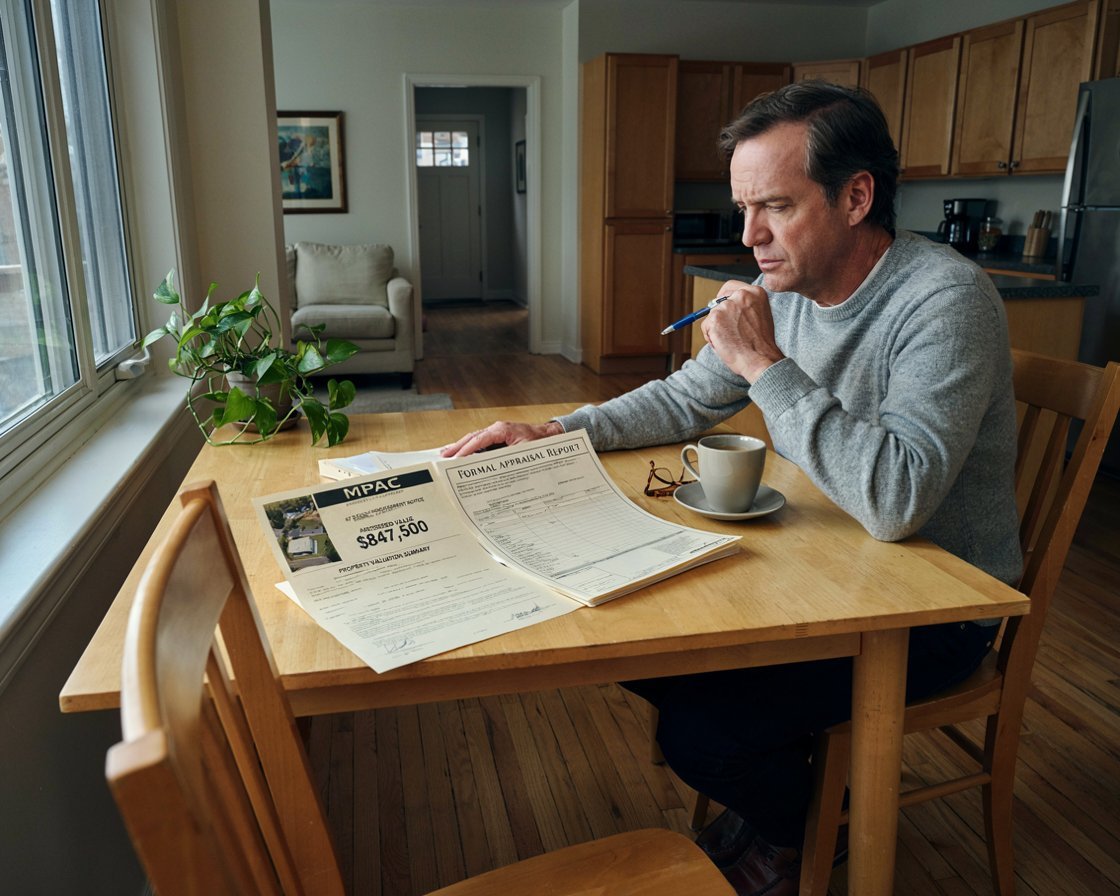
MPAC, Property Tax and Assessment Appeals: When Do You Need an Independent Appraisal?
Every property owner in Ontario has received a Property Assessment Notice at some point and had the same reaction: a quick glance at the number, a mental comparison to what they think the property is worth, and then it goes in a drawer. Most people never question the figure MPAC assigns to their property, even when that number directly determines their property tax bill year after year.
At Innovative Property Solutions, we regularly work with property owners across Toronto, Mississauga, Vaughan, and the GTA who eventually realize their assessment doesn’t reflect reality, sometimes overpaying thousands of dollars annually for years before taking action. Understanding how MPAC assessments work, when you actually have grounds to appeal, and why professional appraisal makes the difference between a successful appeal and a rejected one can save meaningful money.
What MPAC Actually Does and Why Assessments Can Be Wrong
The Municipal Property Assessment Corporation assesses every property in Ontario using mass appraisal techniques, essentially applying valuation models across huge numbers of properties simultaneously rather than individually inspecting and analyzing each one in detail. Property assessments for the current tax year continue to be based on the fully phased-in January 1, 2016 current value, since the province postponed the scheduled province-wide reassessment during the pandemic and has since extended that postponement.
This mass appraisal approach is efficient for MPAC but creates real accuracy problems for individual properties. Automated models work reasonably well for standard properties in stable neighborhoods, but they frequently miss property-specific factors: a finished basement that doesn’t actually exist, an addition that was demolished years ago, a busy road that developed after the assessment date, or a commercial property with unique tenant and income characteristics that mass models simply can’t capture.
We regularly see MPAC assessments that overstate value because the system used outdated square footage, failed to account for functional obsolescence in older commercial buildings, or applied neighborhood averages to a property that doesn’t actually share the comparable characteristics driving that average upward.
The Two-Step Appeal Process
Understanding the actual appeal mechanics matters because the process differs depending on your property classification, and missing a deadline can cost you an entire tax year.
If your property, or a portion of it, is classified as residential, farm, or managed forest, you must first file a Request for Reconsideration with MPAC, and MPAC must issue a decision before you’re eligible to appeal to the Assessment Review Board. The RfR deadline for the current property tax year is March 31. This first step is free and gives MPAC the opportunity to review your assessment using additional information you provide, including corrected property data, photos, sales information, or supporting documentation, all submitted online through MPAC’s AboutMyProperty portal.
If you disagree with the RfR outcome, you then have 90 days from the date MPAC issues its decision to file a formal appeal with the Assessment Review Board, an independent tribunal of the Ontario Ministry of the Attorney General that operates separately from MPAC.
Commercial, industrial, and other non-residential property classes follow a more flexible path. These properties are not required to file an RfR first and can proceed directly to the ARB. If filing directly, the deadline is March 31 of the tax year for annual assessments, or 120 calendar days from the notice date for other assessment types like Change or Amended Notices.
Filing an ARB appeal requires a fee, currently $132.50 for residential properties and $318 for non-residential properties, and this fee is non-refundable even if you settle with MPAC before your scheduled hearing date.
Why an Informal Complaint Rarely Works
Many property owners try calling MPAC directly or submitting a bare RfR with nothing more than “I think my assessment is too high.” This approach almost never succeeds, and understanding why illuminates exactly when independent appraisal becomes necessary.
MPAC’s own guidance is explicit about what supports a successful reconsideration or appeal: correcting inaccurate property data, and more importantly, providing market evidence demonstrating the assessed value doesn’t reflect actual value. The burden of proof sits entirely with the property owner. You are the one who must demonstrate the assessment is incorrect, not MPAC who must defend it.
Simply asserting that your taxes feel too high, or pointing to a neighbor’s lower assessment without deeper analysis, generally fails because it doesn’t constitute the kind of market evidence that carries weight before MPAC reviewers or ARB adjudicators. What actually moves the needle is documented comparable sales evidence, professional analysis of property-specific factors affecting value, and in many cases, a formal independent appraisal report prepared to professional standards.
When Independent Appraisal Becomes Essential
Not every appeal requires a full professional appraisal, but certain situations make independent appraisal the difference between success and a wasted filing fee.
Commercial and industrial properties almost always benefit from independent appraisal because MPAC’s mass appraisal models struggle most with income-producing properties. A commercial building’s value depends heavily on actual net operating income, tenant quality, lease terms, and market capitalization rates, factors that MPAC’s automated systems typically approximate using broad commercial categories rather than property-specific income analysis. When we appraise commercial properties for tax appeal purposes, the gap between MPAC’s assessed value and a properly supported market value analysis is often substantial enough to justify the appraisal cost many times over.
High-value residential properties face proportionally larger consequences from assessment errors. A 10% overassessment on a $600,000 home costs meaningfully less annually than the same percentage error on a $3 million property. For properties at this level, professional appraisal provides documented support that carries significantly more weight than a homeowner’s self-prepared comparison of neighborhood sales pulled from a real estate website.
Properties with unique characteristics that mass appraisal genuinely cannot capture well benefit enormously from independent analysis. This includes properties with functional obsolescence like outdated commercial layouts, properties affected by environmental contamination or nearby disamenities, properties with unusual zoning restrictions, heritage-designated buildings facing renovation constraints, or properties where recent negative changes in the immediate area, a new highway, industrial development, or similar externality, occurred after MPAC’s last full data update but genuinely affect current value.
Properties where MPAC’s data is simply wrong about physical characteristics, square footage, number of units, or lot size represent the most straightforward appeal cases, but even these benefit from professional documentation when the discrepancy is substantial or when the corrected data significantly changes the appropriate comparable set.
Recently purchased properties where the actual arm’s-length sale price differs meaningfully from the MPAC assessed value provide some of the strongest appeal evidence available, particularly when supported by a professional appraisal explaining why the assessment doesn’t reflect the property’s true market position relative to that sale.
What a Professional Appraisal Adds to Your Appeal
An independent appraisal prepared specifically for assessment appeal purposes does something a homeowner’s informal research cannot: it provides a defensible, methodologically sound opinion of value that withstands scrutiny from MPAC reviewers and ARB adjudicators.
At Innovative Property Solutions, our tax appeal appraisals include detailed comparable sales analysis using verified, truly comparable transactions rather than superficially similar properties pulled from a general search. For income-producing commercial and multi-residential properties, we apply proper income capitalization analysis reflecting actual or market-supported net operating income and appropriate capitalization rates, similar to the methodology we’ve detailed in our discussion of how cap rates affect commercial property value.
We document property-specific factors that mass appraisal misses, whether that’s deferred maintenance, functional layout problems, environmental issues, or the kind of highest-and-best-use analysis relevant to properties with unrealized development potential like the multiplex and garden suite scenarios we’ve written about previously.
Critically, the report is prepared to professional appraisal standards with the appraiser’s certification and credentials attached, giving it credibility that a homeowner’s personal analysis, however well-intentioned, simply cannot replicate before a tribunal weighing competing evidence.
The Economics of Appealing
Before pursuing an appeal, it’s worth understanding realistically what’s at stake and whether the potential tax savings justify the cost of professional appraisal.
Property tax appeals typically make the most financial sense when the assessment appears overstated by a meaningful margin, generally 10% or more, and when the property’s overall assessed value is substantial enough that the resulting tax reduction exceeds the appraisal and filing costs by a comfortable margin over a reasonable holding period.
For a residential property, if your assessment seems modestly off, the RfR process alone, being free, is worth attempting with solid comparable evidence before committing to a paid appraisal. For commercial, industrial, or high-value properties where the dollar amounts at stake are larger, or where the ARB appeal stage becomes likely, professional appraisal investment is almost always worthwhile given the multi-year tax savings a successful appeal produces, since a corrected assessment typically holds until the next reassessment cycle.
What Happens After a Successful Appeal
If your RfR or ARB appeal succeeds, the corrected assessment doesn’t just apply retroactively for one tax bill. Depending on when in the assessment cycle the correction is made, the reduced assessment can apply for multiple tax years going forward until the next province-wide reassessment occurs, compounding your savings well beyond the immediate year of the appeal.
It’s also worth noting that if an ARB appeal remains open past March 31, it’s deemed to carry forward into the subsequent tax year’s appeal within the same assessment cycle, meaning ongoing appeals don’t simply expire while working through the tribunal’s schedule.
Getting Started
If you believe your property’s MPAC assessment doesn’t reflect its true value, the first step is an honest professional evaluation of whether you have a strong case before committing time and fees to the formal process.
At Innovative Property Solutions, we help property owners across Toronto and the GTA determine whether their assessment appears defensible or genuinely overstated, and where appropriate, we prepare the independent appraisal documentation needed to support a Request for Reconsideration or Assessment Review Board appeal. Whether you own a single residential property, a commercial building, an industrial facility, or a multi-residential investment property, understanding your true market value is the foundation of any successful assessment challenge.
Contact Innovative Property Solutions to discuss your property assessment and find out whether professional appraisal can support a meaningful reduction in your ongoing property tax burden.


