
Valuing “Power” in 2026: Why Megawatts Beat Square Footage
Industrial real estate valuation in the GTA has fundamentally changed. For decades, appraisers evaluated warehouse and manufacturing properties primarily on square footage, location near Highway 401, and truck access. Those factors still matter, but in 2026, one question dominates every industrial property discussion: how much power capacity does it have?
At Innovative Property Solutions, we’re appraising industrial properties where electrical capacity determines value more than any traditional metric. A 100,000 square foot warehouse with 5 megawatts of secured power is worth substantially more than an identical building with only 1 megawatt, regardless of the location advantages the second property might have.
This shift reflects the infrastructure reality that’s reshaping the entire industrial market across Toronto, Mississauga, Vaughan, and the GTA. Understanding power capacity and its impact on property values has become essential for anyone buying, selling, or investing in industrial real estate.
The Infrastructure Bottleneck
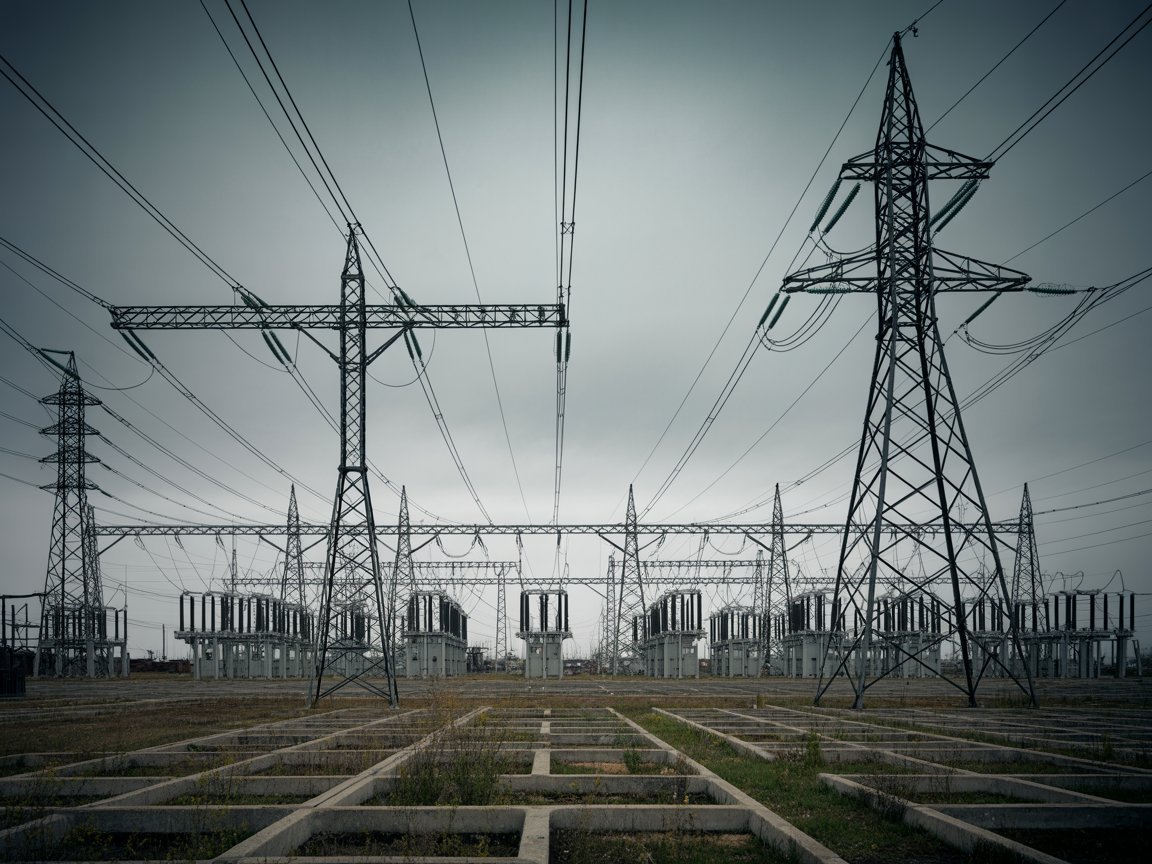
Ontario’s electrical grid is experiencing demand that exceeds infrastructure capacity in key industrial areas. New industrial developments requiring significant power face connection wait times of 36 to 48 months. This isn’t a temporary backlog. The grid requires substantial capital investment and construction time to expand capacity.
For industrial buyers and developers, these timelines create impossible constraints. A logistics company buying land to build a distribution center can’t wait four years for a power connection. A manufacturer expanding operations needs electricity when the building is completed, not years later. Data centers and cold storage facilities require enormous power capacity that new sites simply cannot provide on reasonable timelines.
Properties with existing power capacity or secured connections bypass this bottleneck entirely. These sites can be developed and operational within normal construction timelines because the power infrastructure already exists or is committed through the utility’s capital plan.
This scarcity creates value. When something essential is limited, prices rise for the available supply. Industrial sites with substantial secured power capacity trade at significant premiums because they’re genuinely scarce in the current market.
The $11.3 Million Per Megawatt Benchmark
Electrical infrastructure expansion costs real money. Current estimates for new substation construction and grid connection infrastructure run approximately $11.3 million per megawatt of capacity. This figure includes substations, transformers, transmission lines, and coordination costs with utility providers.
These costs get passed through to property owners and developers in various ways. Sometimes developers pay upfront for infrastructure that serves their specific site. Other times, utilities spread costs across multiple users through connection fees and ongoing charges. Either way, someone pays for the infrastructure, and those costs affect property economics.
For properties with existing capacity, this cost has already been incurred. The infrastructure exists. Buyers don’t face the $11.3 million per megawatt cost. This cost avoidance represents genuine value that gets reflected in property prices.
When we appraise industrial properties at Innovative Property Solutions, we calculate the value of secured power capacity using the replacement cost methodology. If a property has 10 megawatts of available capacity, that capacity represents over $100 million in infrastructure value that buyers would need to invest to create equivalent capacity elsewhere.
Not all of this infrastructure cost translates dollar-for-dollar into property value premiums. The market determines actual value based on supply and demand dynamics. But the infrastructure cost establishes a floor for how much additional value power capacity provides.
Location Priorities Have Changed
Highway 401 access dominated industrial location analysis for generations. Properties within sight of the highway commanded premium prices. Direct interchange access added more value. The logic was simple: industrial operations depend on truck transportation, and highway access facilitates efficient logistics.
This remains true, but power availability now equals or exceeds highway access in importance for many industrial users. A site five kilometres from the 401 with substantial secured power capacity is more valuable than a site at a highway interchange without power availability.
Proximity to electrical substations has become a critical location factor. Properties within the service range of substations with available capacity can potentially access power on reasonable timelines. Properties far from substations with capacity face longer wait times and higher connection costs.
We’re seeing market behaviour reflect this shifted priority. Industrial buyers actively seek sites based on power infrastructure maps showing substation locations and capacity. They’re willing to accept less optimal transportation access in exchange for electrical availability.
This doesn’t mean highway access no longer matters. For conventional warehousing and distribution, transportation access remains crucial. But for power-intensive industrial uses, including data centers, manufacturing with heavy equipment, cold storage, and advanced manufacturing, power capacity has become the dominant location factor.
Which Industrial Uses Drive Power Demand
Not all industrial operations require substantial electrical capacity. Understanding which uses drive power demand helps explain the market dynamics affecting property values.
Data centers represent the most power-intensive industrial use. A single data center can require 20 to 50 megawatts or more to operate server equipment and cooling systems. These facilities cannot function without massive electrical capacity, making power availability absolutely essential for site selection.
Cold storage and food distribution facilities require substantial power for refrigeration systems. Modern cold storage warehouses operate 24 hours daily, running industrial-scale refrigeration, creating constant power demands that exceed typical warehouse operations by factors of five to ten.
Advanced manufacturing, including automotive parts, electronics, and precision manufacturing, operates power-intensive equipment. These facilities require substantial electrical capacity that conventional industrial buildings don’t provide.
Electric vehicle charging infrastructure for commercial fleets is emerging as another power-intensive use. Logistics companies electrifying delivery fleets need charging capacity for dozens or hundreds of vehicles simultaneously, creating power demands that approach data center requirements.
Traditional warehousing and light industrial uses require relatively modest power capacity measured in hundreds of kilowatts rather than megawatts. These users aren’t driving the power capacity premium in the market.
The industrial properties commanding the highest power capacity premiums are those suitable for high-demand uses. Sites that can accommodate data centers, cold storage, or advanced manufacturing trade at substantially higher prices than properties limited to conventional warehousing.
Appraisal Methodology for Power Capacity
Valuing power capacity requires methodology beyond standard industrial appraisal approaches. At Innovative Property Solutions, we’ve developed analysis frameworks that properly account for electrical infrastructure as a value component.
We verify actual available capacity through utility coordination and documentation review. Claimed capacity doesn’t always match reality. Confirming what capacity actually exists and is accessible to the property is essential for accurate valuation.
We determine whether capacity is secured through long-term agreements, available subject to application and fees, or merely potentially available if infrastructure gets expanded. These distinctions dramatically affect value because certainty matters more than theoretical future capacity.
We analyze comparable sales of properties with similar power capacity to establish market-supported premiums. The market for power-intensive industrial properties is developing rapidly, and comparable sales provide the best evidence of what buyers actually pay for electrical capacity.
We apply cost approach analysis using the $11.3 million per megawatt infrastructure benchmark to establish value floors. While market value can exceed or fall short of replacement cost, understanding the cost to create equivalent capacity provides important context for value conclusions.
We consider the property’s suitability for power-intensive uses. A site with substantial power capacity but constraints that prevent high-value uses won’t capture full capacity premiums. Location, size, configuration, and zoning all affect whether a property can effectively use its electrical capacity.
Investment Implications
The power capacity dynamics create specific opportunities and risks for industrial real estate investors across the GTA.
Properties with existing substantial power capacity should be valued based on that capacity, not just square footage and location. Sellers are leaving money on the table if they don’t recognize and market the power capacity value their properties provide.
Properties near substations with available capacity may have development potential beyond what traditional analysis suggests. Buyers who understand electrical infrastructure can identify sites that can secure power capacity more readily than competing locations.
Properties without significant power capacity face limited buyer pools and potentially declining relative values as power-intensive users dominate industrial demand growth. These properties remain suitable for conventional warehousing but miss the premium pricing that power capacity commands.
Development sites require power capacity analysis before acquisition. Buying industrial land without confirmed power availability creates an enormous risk that the site cannot be developed on the timelines that investment returns require.
Leasing dynamics reflect power capacity through rental rates. Industrial tenants with high power requirements pay premiums for buildings with adequate capacity. Landlords with powered facilities can command rents that purely traditional industrial buildings cannot achieve.
Market Outlook
The power capacity constraint seems likely to persist for years, as grid infrastructure expansion cannot keep pace with industrial demand growth. This supply-demand imbalance supports continued premiums for properties with secured electrical capacity.
Government and utility infrastructure investment will eventually expand grid capacity, but the timeline spans years and substantial capital requirements. New capacity comes online gradually rather than flooding the market and eliminating scarcity.
Industrial uses requiring substantial power will continue growing. Data center demand, cold storage for food distribution, electric vehicle charging, and advanced manufacturing all represent expanding sectors that need power-intensive industrial facilities.
The properties positioned to capture this demand growth are those with power capacity already secured. These sites can serve markets that properties without capacity simply cannot address.
Get Professional Valuation
Industrial property valuation in 2026 requires understanding electrical infrastructure as thoroughly as transportation access or building specifications. Professional appraisal from Innovative Property Solutions provides the specialized analysis needed for accurate valuations that account for power capacity value.
Whether you’re buying, selling, financing, or managing industrial properties across Toronto, Mississauga, Vaughan, or the GTA, contact us for appraisal services that properly value power capacity alongside traditional property attributes.
The industrial market has changed fundamentally. Make sure your property valuations reflect the new reality where megawatts matter as much as square footage.


