
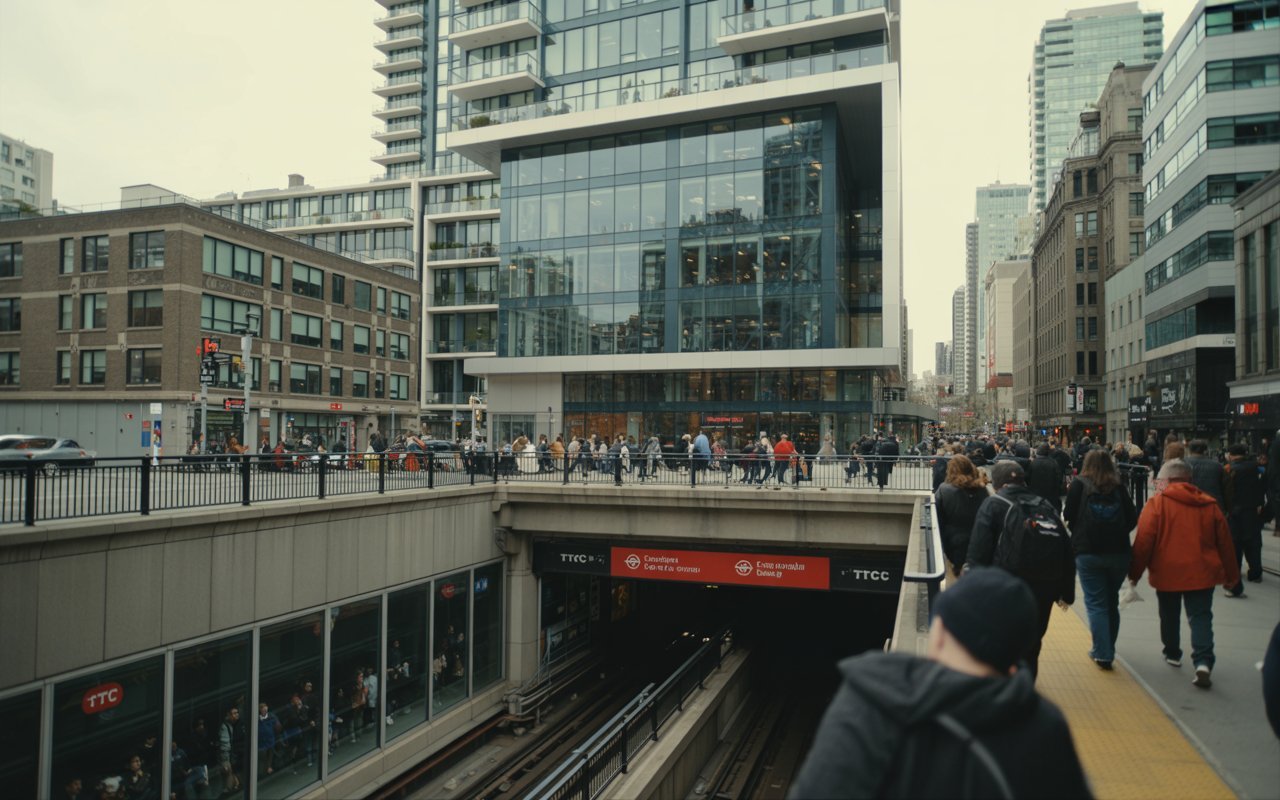
Appraising Transit Air Rights: Building on Top of the Subway
Building directly on top of a subway station sounds like science fiction, but it’s becoming a reality across the GTA through the Transit-Oriented Communities program. At Innovative Property Solutions, we’re appraising these unique properties where developers don’t just build near transit—they literally build integrated with the station infrastructure itself.
This isn’t your typical property appraisal. When you’re valuing the right to construct a 40-story tower on top of a subway station, traditional square footage comparables don’t tell the whole story. The technical, legal, and financial complexities require specialized expertise that goes far beyond standard residential or commercial appraisal.
Understanding the TOC Program Shift
The Transit-Oriented Communities program represents a fundamental change in how transit and development work together in the GTA. Historically, transit stations and buildings existed as separate projects on separate lots. The TTC built stations. Developers built condos or offices nearby. They coexisted but remained distinct entities.
The TOC program integrates them into a single structure. Along the Ontario Line at stations like Corktown, King-Bathurst, and Queen-Spadina, developers are building residential towers, retail space, and office buildings that sit directly on top of the subway stations themselves. The station entrance flows directly into the building lobby. Residents take elevators down to the subway platform without ever going outside.
This integration creates what planners call “transit villages” or complete communities. The concept centers on maximizing valuable urban land by putting everything people need within a 400-meter walkable radius of the station. You live in the building, work in the office floors, shop in the retail podium, and access the subway without leaving the complex.
For the government, the TOC program solves a financial problem. Building subway lines costs billions of dollars. By selling or leasing the air rights above stations—the development rights to build on top of the infrastructure—the government generates revenue that helps offset transit construction costs. Instead of paying for everything through taxes, some of the cost gets recovered through real estate development.
The Integrated Access Premium
Properties located near transit stations have always commanded value premiums. Buyers and tenants pay more for convenient subway access. But there’s a significant difference between being near a station and being integrated with one.
Research on transit-oriented development shows properties with direct integrated access can see land value increases up to 120 percent compared to similar properties without transit proximity. This isn’t just about being a five-minute walk from the station. This is about stepping out of your condo unit and being at the subway platform in 30 seconds.
The geography of transit value impact follows predictable patterns. The highest land value increases typically occur within 500 to 800 meters of stations. But the very core location—the parcels directly above or immediately adjacent to stations—command the absolute highest prices per square foot because of the unmatched access they provide.
Transit investment affects different property types differently. Commercial properties typically see larger value increases than residential properties. Condominiums benefit more than single-family homes because density and transit access align naturally. Office buildings at transit hubs attract tenants willing to pay premium rents for employee convenience and reduced parking requirements.
When we appraise TOC properties at Innovative Property Solutions, these premiums translate into measurable value differences. A residential development integrated with a station might be worth 30 to 50 percent more per square foot than an identical building three blocks away. For commercial properties, the gap can be even larger.
Valuing Air Rights Using Residual Methodology
Standard appraisal approaches struggle with air rights over transit infrastructure because traditional comparable sales don’t exist. We can’t simply find similar properties that sold recently and use those prices to establish value. Each TOC project is unique, and the market is still developing.
Instead, we often use residual methodology combined with income capitalization to determine air rights value. The calculation works backwards from the completed project:
Start with the value of the completed development sitting on top of the station. We can estimate this using comparable sales of similar buildings and income projections based on market rents.
Subtract the extraordinary costs of building over transit infrastructure rather than on solid ground. This includes the platform or deck structure needed to support the building above the station, specialized engineering for vibration control and structural loading, and coordination costs with ongoing transit operations.
Subtract appropriate developer profit margins and risk premiums that account for the additional complexity and uncertainty of building integrated with active subway infrastructure.
What remains is the residual value of the air rights themselves—what the development rights to build above the station are actually worth, given the costs and risks involved.
The extraordinary costs of building over transit are substantial. Industry estimates suggest platform construction costs between $250 and $700 per square foot just for the structure that supports the building. To make these projects financially viable, they typically need to be 10 to 15 percent larger or denser than projects on regular land to spread these costs across more sellable or leasable space.
Technical and Engineering Considerations
Appraising TOC properties requires understanding the technical constraints that affect both construction costs and development potential. These engineering realities directly influence property values.
Structural loading represents the most fundamental constraint. The subway station infrastructure must support whatever gets built on top. A 40-story residential tower creates enormous structural loads that the station design needs to accommodate. This affects both the station construction and the building design in ways that increase costs compared to buildings on solid ground.
Vibration mitigation becomes critical when people live and work directly above subway trains. Modern engineering can address vibration through isolation systems and structural design, but these solutions add cost and complexity that affect project economics and, therefore, air rights value.
Ventilation and air quality systems require careful coordination. The subway needs ventilation for passenger safety and comfort. The building above needs its own HVAC systems. Integrating these without conflicts while maintaining air quality standards creates design challenges that influence construction costs.
Timeline coordination adds another layer of complexity. The subway station and the building above need to progress together through design and construction. Changes to either can affect the other. This interdependency creates risks of delays and cost overruns that prudent developers factor into their financial models and that appraisers consider when valuing air rights.
Disamenities and Design Challenges
Building directly on transit infrastructure creates potential negatives that can affect residential property values if not properly addressed through design.
Noise from train operations, station announcements, and passenger activity occurs 18 hours per day or more. While engineering can minimize noise transmission, perceived noise concerns can suppress residential unit values, particularly for units closest to station areas.
Safety perceptions matter for residential buyers and tenants. Station entrances can attract activities that some residents find concerning. Well-designed TOC projects address this through active programming, security presence, and design that promotes natural surveillance, but the perceived risks still factor into valuation analysis.
When we appraise TOC residential components, we analyze how effectively the design mitigates these potential negatives. Projects with excellent noise isolation, secure building access separate from public transit areas, and thoughtful design that creates psychological separation between residential and transit functions maintain stronger residential values than projects where these concerns weren’t adequately addressed.
Legal Structures and Ground Lease Complexity
Most TOC projects use ground lease structures rather than fee simple ownership. Understanding these legal arrangements is essential for accurate appraisal because they significantly affect property values and financing.
Under typical ground leases, the government retains land ownership while leasing it to developers for 50 to 99 years. The developer owns the building but not the land underneath. At the lease end, the building ownership typically reverts to the government unless the lease is renewed.
Ground rent is the payment the developer makes to the government for the right to use the land. This rent can be structured as fixed amounts, a percentage of revenue, or market-based rates that reset periodically. The structure dramatically affects property value and financing availability.
Rent reset clauses create significant appraisal challenges. When ground rent resets every 20 or 30 years to market rates, we need to project what fair market rent will be decades in the future. This requires valuing the land “as if unencumbered and available for its highest and best use” at future dates, which involves substantial uncertainty and judgment.
Financing complexities arise because ground rent payments take priority over mortgage payments. Lenders worry that if ground rent increases substantially at reset, the property might not generate enough income to cover both ground rent and debt service. Unless ground rent is fixed for the full loan term, obtaining conventional financing can be challenging.
When we appraise leasehold interests in TOC projects at Innovative Property Solutions, we carefully analyze the lease terms, rent structure, reset provisions, and financing implications. These factors can create value differences of 20 to 40 percent compared to similar properties with fee simple ownership.
ESG Factors and Institutional Investment
Environmental, social, and governance considerations increasingly influence TOC property valuations because institutional investors incorporate ESG metrics into their investment decisions.
High-density development at transit stations reduces automobile dependency and associated carbon emissions. Residents and workers can use transit instead of driving, which aligns with corporate and institutional sustainability commitments. This environmental benefit translates into financial value as ESG-focused investors pay premium prices (lower capitalization rates) for properties with strong sustainability profiles.
Social value comes from the complete community aspects of TOC projects. Mixing residential, commercial, and community uses at transit stations creates vibrant neighbourhoods and increases housing supply in high-demand urban locations. Institutional investors value these social benefits alongside financial returns.
Inclusionary zoning requirements in many TOC projects mandate affordable housing components and community spaces. While these requirements reduce the percentage of market-rate units, they’re often offset by density bonuses that allow larger overall projects. Appraisers need to model how these requirements affect project economics and final property values.
When we appraise TOC properties for institutional buyers, we document the ESG attributes that support their investment criteria and help justify the premium valuations these properties often command in the current market.
Current Market Realities
The TOC market in the GTA remains relatively new, which creates both opportunities and challenges for appraisal and investment.
Limited comparable sales data means we rely heavily on residual and income approaches rather than pure sales comparison. As more TOC projects complete and trade, our comparable database will improve, but currently, each project requires detailed financial modelling and market analysis beyond standard comparable sales methodology.
Developer interest remains strong despite the complexities because the integrated transit access creates genuine value that supports premium pricing for residential units and commercial space. Projects along the Ontario Line are attracting major developers willing to navigate the technical and financial challenges because market demand for transit-oriented living is clear.
Financing availability is improving as lenders become more comfortable with TOC projects and ground lease structures. Early projects faced limited financing options, but as the market matures and successful projects demonstrate viability, conventional financing is becoming more accessible.
Government coordination has improved through experience. Early TOC projects encountered coordination challenges between transit agencies, developers, and municipalities. The learning curve has shortened timelines and reduced conflicts that plagued initial projects.
Professional Appraisal Expertise Required
Appraising transit air rights and integrated TOC projects requires specialized knowledge beyond standard residential or commercial appraisal expertise. At Innovative Property Solutions, we’ve developed this expertise through a detailed study of TOC program requirements, ground lease structures, and the engineering and financial complexities that affect these unique properties.
Our appraisals for TOC projects include analysis of ground lease terms and rent structures, residual valuation of air rights accounting for extraordinary construction costs, market research on transit premium values in comparable markets, assessment of technical risks and mitigation costs, and review of ESG factors affecting institutional investor interest.
Whether you’re a developer evaluating TOC opportunities, an institutional investor considering TOC property acquisition, a lender requiring appraisal for project financing, or a government agency establishing air rights pricing, professional appraisal from experienced specialists provides the analysis necessary for confident decision-making in this emerging market.
Looking Forward
Transit-oriented development will continue expanding across the GTA as new transit lines progress and the TOC program matures. Understanding how to value these integrated projects becomes increasingly important for all participants in the real estate market.
The fundamental economics of building on top of transit—the extraordinary costs, the access premiums, the technical challenges—will remain consistent even as specific projects vary. Professional appraisal expertise that accounts for these factors provides the foundation for successful TOC development and investment.
Contact Innovative Property Solutions to discuss appraisal needs for transit-oriented properties, air rights valuation, ground lease analysis, or any specialized commercial or residential appraisal requirements across Toronto and the GTA. Our expertise in emerging property types and complex valuation challenges helps clients navigate opportunities in the region’s evolving real estate market.


