
Why Industrial Real Estate Dominates Toronto in 2026: Warehouses, Logistics, and E-Commerce Growth
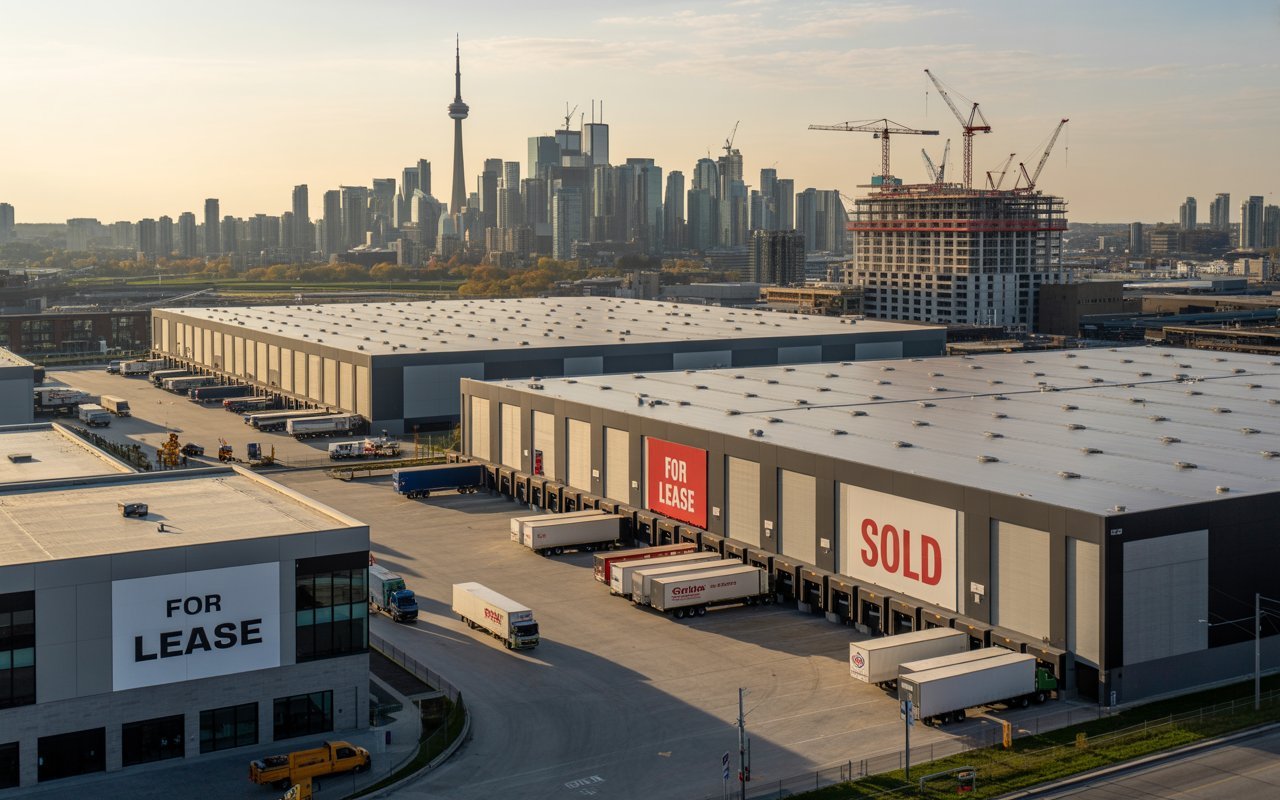
Drive along Highway 401 through the GTA, and you’ll notice something that’s been impossible to miss for the past few years: massive warehouse and distribution centers going up everywhere. Where farmland and vacant lots used to sit, you now see sprawling logistics facilities with dozens of truck bays and parking lots filled with delivery vans.
This isn’t random development. It’s the physical manifestation of how we all shop and live now. Every package delivered to your door, every online order, every same-day delivery option exists because of these industrial buildings. And in 2026, industrial real estate has become the most sought-after property type in the entire Toronto market.
At Innovative Property Solutions, we appraise industrial properties across the GTA from small flex warehouses in Mississauga to massive distribution centers in Vaughan and Milton. What we’re seeing is a market so tight that finding available industrial space has become genuinely difficult, and that scarcity is creating both opportunities and challenges for anyone involved in this sector.
The E-Commerce Engine Driving Everything
Let’s start with why industrial real estate became the dominant property type. The simple answer is that online shopping completely changed how products move from manufacturers to consumers.
Before e-commerce took over, most retail products went from manufacturers to regional warehouses to retail stores, where customers bought them. This supply chain required some warehouse space, but the bulk of the inventory sat in retail stores themselves. Shopping malls and big box retailers were essentially distributed warehouses that also served as sales locations.
E-commerce flipped this model. Now products go from manufacturers to massive fulfillment centers to local distribution hubs to your front door. Retail stores still exist, but they’re smaller and carry less inventory. All that inventory that used to sit in stores now sits in warehouses somewhere, and it needs to get to customers within one or two days of ordering.
This shift requires enormously more warehouse space. Amazon alone operates multiple massive facilities across the GTA. Add in every other retailer that now offers online ordering and fast delivery, plus all the pure e-commerce companies, and you understand why industrial real estate demand has exploded.
The pandemic accelerated this trend dramatically. When retail stores closed and everyone started ordering everything online, the e-commerce infrastructure had to expand rapidly to handle the volume. Even as stores reopened, online shopping habits stuck. People who never ordered groceries or household items online before 2020 now do it regularly.
By 2026, e-commerce will no longer be a trend. It’s just how commerce works, and that reality supports continued strong demand for industrial space across the Toronto area.
The GTA as Logistics Hub
Toronto’s geographic position creates natural advantages for industrial real estate that keep getting stronger. The GTA sits at the center of a massive population corridor stretching from Windsor through Toronto to Montreal. Over half of Canada’s population lives within this region, and Toronto anchors it.
Highway 401 through the GTA is one of the busiest freight corridors in North America. Goods moving between eastern and western Canada pass through here. Products coming from the United States into Canada flow through Toronto. Imports arriving at the Port of Montreal or through border crossings are distributed from GTA warehouses.
This central location means that a distribution center in the GTA can serve the entire Ontario market efficiently. You can reach Ottawa, London, and everywhere in between with same-day or next-day truck delivery from Toronto-area warehouses. This efficiency matters enormously for e-commerce and logistics operations.
The concentration of population in the GTA itself creates additional demand. With over six million people in the region, you need local distribution facilities to support last-mile delivery. Same-day delivery of groceries, restaurant meals, and online orders requires warehouses scattered throughout the GTA in Mississauga, Vaughan, Richmond Hill, Markham, Oakville, and other municipalities close to residential areas.
Air freight capacity through Pearson Airport adds another advantage. Products that need fast delivery from overseas can arrive by air and be distributed across Canada from GTA warehouses. This multi-modal connectivity makes the region valuable for logistics operations serving national and international markets.
Vacancy Rates That Tell the Story
The clearest indicator of industrial real estate strength in the GTA is the vacancy rate, which sits between 3.2 and 4 percent depending on the specific submarket and property type. For context, anything under 5 percent is considered a very tight market. Under 4 percent is extremely tight, and some GTA industrial submarkets are even lower.
This means that if you’re a company looking for warehouse space in the GTA right now, your options are severely limited. Available properties get leased quickly, often with multiple companies competing for the same space. Landlords can be selective about tenants and aren’t offering the concessions or incentives that might be common in softer markets.
The low vacancy creates fascinating dynamics when we appraise industrial properties at Innovative Property Solutions. A building that might sit empty for months in a normal market will lease within weeks in the current GTA environment. This affects value calculations because we can project income with high confidence knowing that demand far exceeds available supply.
Compare Toronto’s industrial vacancy to other property types, and the difference is stark. Office vacancy downtown sits at around 17 percent. Retail vacancy varies but runs higher than industrial in most areas. Industrial stands alone as the tightest, strongest commercial real estate sector in the region.
Globally, the GTA ranks among the tightest industrial markets anywhere. Only a handful of major markets worldwide show comparably low industrial vacancy. This global context matters for international investors evaluating where to deploy capital in industrial real estate. Toronto competes successfully for investment against markets worldwide because the fundamentals are so strong.
The vacancy situation also highlights supply constraints that we’ll discuss later. Vacancy is low partly because demand is strong, but also because new supply hasn’t kept pace with that demand. You can’t lease space that doesn’t exist, and the GTA has struggled to bring enough new industrial product to market to satisfy demand.
Rental Rates and Location Dynamics
Industrial rental rates across the GTA have increased substantially over the past several years, with modern warehouse space along the Highway 401 corridor now averaging around $15.25 per square foot for net leases. This represents significant growth from rates that were in the $8 to $10 range just five years ago.
Location drives these rates more than any other single factor. Properties with direct Highway 401 access command the highest rents because they offer the best truck access and distribution efficiency. Modern facilities near major highway interchanges are the most valuable industrial real estate in the region.
Proximity to population centers adds premium value for last-mile distribution facilities. A warehouse in Mississauga, close to residential areas, can support same-day delivery services more effectively than a facility further from consumers. This location advantage translates into higher rents for well-positioned properties.
The 401 corridor from Burlington through Mississauga, Vaughan, and into Markham represents prime industrial territory. Properties here benefit from highway access, a central GTA location, and strong labour pools. When we appraise industrial properties in this corridor, location premiums are clearly visible in both rents and property values.
Secondary locations, including areas north of the 401, parts of Durham Region, and more distant GTA communities, offer lower rents but still see strong demand. Companies willing to accept slightly less convenient locations can find meaningful rent savings, though availability even in secondary markets remains limited.
Building quality affects rents as significantly as location. Modern facilities with 32-foot clear heights, ESFR sprinkler systems, ample truck courts, and dock-high and drive-in doors command substantial premiums over older buildings with lower ceilings and less efficient layouts. A new Class A warehouse might rent for $16 to $18 per square foot, while an older facility in the same area gets $11 to $13.
From an appraisal perspective, understanding these location and quality differentials is essential for accurate valuation. Industrial properties that look similar on paper can have very different values based on subtle location advantages or building specification differences that affect tenant appeal and achievable rents.
Investment Dominance
Industrial real estate accounts for approximately 45 percent of total commercial real estate investment in Canada, making it the single largest investment category. This dominance reflects investor confidence in the sector’s fundamentals and future prospects.
Institutional investors, including pension funds, REITs, and insurance companies, have dramatically increased their industrial real estate allocations. These conservative investors seek stable income and capital preservation, and they’ve concluded that industrial properties offer the best risk-adjusted returns in commercial real estate.
The institutional preference for industrial creates competitive bidding for quality properties. When an attractive industrial building comes to market in the GTA, multiple institutional buyers often compete to acquire it. This competition drives prices up and capitalization rates down to levels that would have seemed impossible a decade ago.
Private investors and smaller funds also pursue industrial properties aggressively, though they often get outbid by institutional buyers on larger assets. Private capital tends to focus on smaller properties, value-add opportunities, or development projects where it can compete more effectively against larger investors.
Foreign investment in Canadian industrial real estate has increased as international investors recognize the sector’s strength. Asian investors, European funds, and American institutional buyers all view the GTA industrial market as attractive for capital deployment. This international demand adds to the already strong domestic investment appetite.
The investment activity creates interesting valuation challenges. In highly competitive markets, properties sometimes trade at prices that seem to exceed what cash flow analysis alone would support. Investors are betting on continued rent growth and value appreciation rather than just current income. When we appraise industrial properties, we need to balance actual income and market fundamentals against investor behaviour that’s driving aggressive pricing.
Understanding the Supply Constraints
The tight vacancy and strong pricing in GTA industrial markets exist partly because bringing new supply to market has become increasingly difficult. Several factors limit new industrial development even as demand keeps growing.
Land availability represents the most fundamental constraint. The GTA is largely built out, with limited vacant land suitable for industrial development remaining within reasonable proximity to highways and population centers. The land that does exist is expensive and often faces competition from residential developers who can pay premium prices.
Municipal approvals for industrial development take time and face community resistance in many areas. Residents near proposed industrial sites worry about truck traffic, noise, and visual impacts. This opposition can delay or prevent projects even when they make economic sense and meet planning requirements.
Environmental regulations and requirements add costs and complexity to industrial development. Stormwater management, environmental assessments, and sustainability requirements all increase development expenses and timelines. While these regulations serve important purposes, they do constrain how much new industrial supply can be delivered.
Construction costs have increased significantly, making development economics challenging even when land is available and approvals are secured. Labour shortages, material costs, and supply chain disruptions affect industrial construction just as they impact residential building. Developers need confidence that rental rates will support these higher construction costs.
The result of these supply constraints is that new industrial development isn’t keeping pace with demand growth. The market needs more warehouse space than is being built, which keeps vacancy low and supports continued rent growth. This supply-demand imbalance seems likely to persist for years, given how difficult and expensive new development has become.
For investors and developers, supply constraints create opportunities. Properties that do get built face minimal competition for tenants. Development projects that navigate the approval process successfully can generate strong returns. Existing buildings appreciate in value as scarcity supports pricing power.
Cap Rate Compression and Valuation
Capitalization rates for industrial properties in the GTA have compressed dramatically, meaning investors accept lower initial returns because they’re confident about future income growth and value appreciation. Prime industrial properties that might have traded at 6 percent cap rates a few years ago now sell at 4 to 4.5 percent.
This cap rate compression reflects strong investor demand and confidence in the sector. When many buyers compete for limited properties, prices rise relative to current income. Buyers are willing to pay premium prices because they believe rents will increase and the properties will appreciate.
From an appraisal standpoint, cap rate compression creates interesting challenges. We need to determine appropriate cap rates based on actual market transactions while also considering whether current pricing is sustainable or represents temporary market exuberance.
The risk with compressed cap rates is that if market conditions change, values could decline even if rental income remains stable. A property valued at a 4 percent cap rate is worth 25 times its net operating income. If market cap rates increase to 5 percent, that same income stream is only worth 20 times NOI, representing a 20 percent value decline.
However, industrial fundamentals in the GTA are strong enough that many investors aren’t particularly worried about this risk. As long as e-commerce keeps growing, logistics needs keep expanding, and supply remains constrained, the underlying value proposition for industrial real estate seems secure.
Different Property Types and Uses
Industrial real estate isn’t monolithic. Different building types serve different purposes and appeal to different tenant types, which affects both rental rates and property values.
Fulfillment and distribution centers are the massive facilities you see along highways designed for high-volume goods movement. These buildings might be 300,000 to over 1 million square feet with 50 or more truck docks. Tenants include major retailers, third-party logistics companies, and e-commerce operations. These properties command strong rents and attract institutional investors.
Last-mile distribution facilities are smaller buildings located close to residential areas to support rapid delivery. They might be 30,000 to 100,000 square feet and focus on getting products to consumers within hours of ordering. These properties have grown in importance as same-day delivery has become standard for many products.
Flex industrial buildings combine warehouse space with office or showroom areas. They’re popular with small manufacturers, distributors, and service companies that need both storage and office space. These properties are typically 10,000 to 50,000 square feet and serve local rather than regional markets.
Cold storage and specialized facilities serve food distribution, pharmaceuticals, and other products requiring temperature control. These buildings require significant capital investment in refrigeration systems but generate premium rents that justify the additional costs.
When we appraise industrial properties at Innovative Property Solutions, understanding the specific property type and its tenant appeal is essential. A 50,000 square foot flex building in Mississauga has completely different value characteristics than a 500,000 square foot distribution center in Vaughan, even though both are industrial properties in the GTA.
Risks on the Horizon
Despite industrial real estate’s current strength, potential risks deserve consideration for anyone investing in this sector.
E-commerce growth could slow or plateau if consumer behaviour shifts back toward in-store shopping or if online retail market share stabilizes. While this seems unlikely given current trends, it’s possible that e-commerce’s share of total retail has peaked and industrial demand growth might moderate.
Automation and robotics could eventually reduce warehouse space needs as facilities become more efficient at storing and moving goods. Amazon and other major logistics operators are heavily investing in automation that might allow them to handle more volume in less space.
Economic recession could reduce consumer spending and, therefore, reduce demand for warehouse space to store and distribute products. If retail sales decline significantly, some industrial space could become redundant, and vacancy rates might increase.
Interest rate changes affect industrial property values because they influence cap rates and investor returns. If rates increase substantially, industrial property values could decline even if rental income remains stable.
New supply could eventually catch up with demand if development activity increases. While current supply constraints seem likely to persist, municipal policies could change to facilitate more industrial development, which would ease the tight market conditions.
These risks are worth considering, but don’t change the fundamental case for industrial real estate in 2026. The sector’s strength is based on structural changes in how commerce works rather than temporary factors, and the risks seem manageable compared to the opportunities.
Why Professional Appraisal Matters
The combination of strong demand, aggressive investor competition, and limited comparable sales creates an environment where industrial properties can easily be mispriced. Professional appraisal from certified experts at Innovative Property Solutions provides the market intelligence needed for confident investment decisions.
Industrial assets often trade at prices that reflect investor enthusiasm as much as fundamental value. When multiple buyers compete for the same property, winning bids can exceed what a detailed cash flow analysis would support. Before committing to these acquisitions, you need an objective valuation that helps you understand whether you’re paying fair value or overpaying.
Financing industrial acquisitions requires lender-approved appraisals that meet banking standards. If you’re borrowing money to purchase industrial property, the bank will require a professional appraisal to verify that the property value supports the loan amount. Getting this done the first time correctly prevents delays and complications in closing your transaction.
Tax planning for industrial properties benefits from an accurate appraisal that establishes an appropriate cost basis for depreciation and establishes values for property tax appeals. Professional documentation supports your tax positions and helps minimize ongoing property tax obligations.
Portfolio valuation for investors holding multiple industrial properties requires consistent, professional appraisal across all assets. Understanding your total portfolio value helps with strategic planning and provides documentation for stakeholders and partners.
At Innovative Property Solutions, we appraise all types of industrial properties across the GTA, from small flex buildings to massive distribution centers. We understand local market dynamics, track rental rates and cap rates across different submarkets, and provide valuations grounded in actual market conditions rather than assumptions or outdated data.
Looking Forward
The industrial real estate sector enters 2026 from a position of strength that seems likely to continue. E-commerce isn’t reversing, supply chains won’t suddenly need less warehouse space, and Toronto’s advantages as a logistics hub aren’t disappearing.
The biggest question is whether new supply will eventually ease the tight market or whether supply constraints will keep vacancy low for years to come. Either scenario offers opportunities for the right investors with appropriate strategies.
If supply remains constrained, existing industrial properties will continue appreciating, and rental growth will remain strong. Investors who own well-located industrial assets will benefit from ongoing scarcity value.
If new supply increases substantially, development and redevelopment opportunities will expand. Investors and developers who can navigate the approvals process and execute projects successfully will capture strong returns from creating new inventory in a market hungry for space.
Get Professional Guidance
Whether you’re buying, selling, refinancing, or simply trying to understand the value of industrial property you own in the GTA, a professional appraisal from Innovative Property Solutions provides the clarity you need.
We appraise industrial properties throughout Toronto, Mississauga, Vaughan, Markham, Richmond Hill, Oakville, Burlington, and across the entire Greater Toronto Area. Our valuations meet lender requirements, support investment decisions, and provide the detailed market analysis that helps you understand your property’s position in this dynamic market.
Don’t make million-dollar decisions about industrial real estate based on incomplete information or aggressive broker opinions. Get a certified professional appraisal that accurately reflects market conditions and helps you avoid overpaying or undervaluing valuable assets.
Contact Innovative Property Solutions today to discuss your industrial property appraisal needs and learn how our expertise can support your investment success in Toronto’s dominant real estate sector.


