
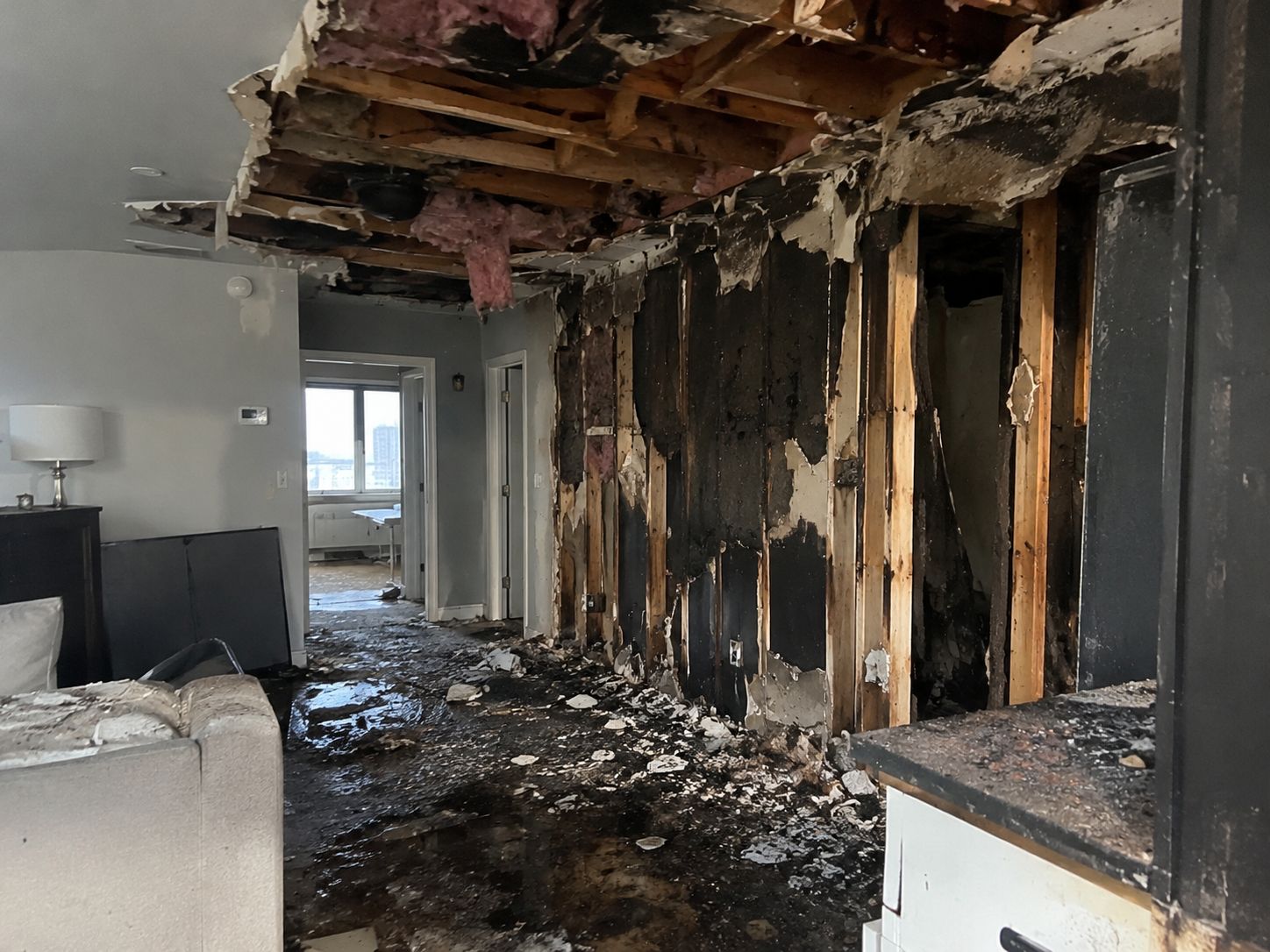
Insurance Damage Appraisal in Toronto: Valuing Property Loss After a Fire, Flood, or Major Claim
Most property owners spend time thinking about getting the right insurance coverage in place. Very few think about what happens when they actually need to use it.
Filing a major property insurance claim after a fire, flood, water damage, or structural loss is one of the most stressful financial situations a homeowner or commercial property owner can face. And the hard truth is that the insurance adjuster working your claim is employed by, or contracted to, your insurer. Their job is to settle the claim. Your job is to make sure that settlement reflects what your loss is actually worth.
That is where an independent insurance damage appraisal comes in.
What Is an Insurance Damage Appraisal?
An insurance damage appraisal is a formal, independent valuation of property loss following an insured event. It documents the extent of physical damage, quantifies the cost to repair or rebuild, and in cases where the property cannot be restored to its pre-loss condition, establishes the reduction in market value caused by the event.
This is different from the appraisal your insurer commissions. The insurer’s adjuster assesses the loss from the insurer’s perspective. An independent appraisal, prepared by a designated appraiser under CUSPAP (Canadian Uniform Standards of Professional Appraisal Practice), is prepared solely in the interest of the property owner.
When the two figures disagree, the independent appraisal is what gives you grounds to dispute the settlement, request a review, or pursue the formal appraisal process under Ontario’s Insurance Act.
When Do You Need an Independent Insurance Damage Appraisal?
Not every claim requires one. But there are situations where getting an independent opinion is not just helpful, it is essential.
Your insurer’s settlement offer feels low. If the adjuster’s payout would not cover the actual cost to repair or rebuild your property to its pre-loss condition, you have the right to challenge it. An independent appraisal gives you a documented, professional counter-figure backed by a designated appraiser.
You and your insurer cannot agree on the loss amount. Under the Ontario Insurance Act, either party in a property insurance dispute has the right to invoke the appraisal process. Each side appoints an independent appraiser, and if those two appraisers cannot agree, an umpire makes the final determination. Having your own appraiser is a legal right in this process, not just an option.
The damage affects the property’s market value, not just its repair cost. Some types of damage, even after repairs, leave a property with a measurably lower market value. Smoke damage to heritage finishes, flood damage to a basement that cannot be fully remediated, or fire damage that results in structural modifications to a historic home can all result in stigma or physical depreciation that the repair bill alone does not capture. An independent appraiser can document and quantify that residual loss.
You are a commercial property owner with lost income. A business interruption claim tied to a property damage event often requires a documented baseline of what the property was earning before the loss. An independent appraisal of the income-producing property, including its pre-loss rental income and market value, supports the income loss portion of the claim.
Your property was underinsured and you are facing a co-insurance penalty. If your policy included a co-insurance clause and your insured value was below the required percentage of full replacement cost, your insurer may reduce your payout proportionally. In this situation, a current replacement cost appraisal documents the actual value and can be the basis for disputing the penalty calculation. We covered this in detail in our piece on co-insurance penalties and what they mean for your claim.
How Does the Insurance Appraisal Process Work in Ontario?
The formal appraisal process under the Ontario Insurance Act works as follows.
When a property owner and insurer cannot agree on the amount of a loss, either party can provide written notice invoking the appraisal process. Once invoked, each party appoints a competent and disinterested appraiser. The two appraisers then attempt to agree on the loss. If they cannot agree within a reasonable time, they appoint an umpire. Any two of the three, meaning either the two appraisers or one appraiser and the umpire, can make a binding determination of the loss amount.
This process is specifically designed to resolve disputes without going to court. It is faster and less expensive than litigation. But it only works in your favour if your appointed appraiser is genuinely independent and properly qualified.
An appraiser holding the AACI designation (Accredited Appraiser Canadian Institute) has met the highest standard of competency under the Appraisal Institute of Canada’s guidelines. For a complex commercial or residential damage appraisal where the outcome directly affects your insurance settlement, designation matters.
Fire Damage Appraisals in Toronto
Fire is one of the most complex loss scenarios an appraiser works with. The visible destruction is often only part of the picture. Smoke and heat damage can penetrate walls, HVAC systems, and structural components in ways that are not immediately apparent but that significantly affect repair costs and, in some cases, market value.
For a fire damage appraisal, the appraiser needs to:
Establish the property’s pre-loss market value or replacement cost, depending on the policy basis. Document the extent of the physical damage through site inspection and review of contractor and engineer reports. Quantify the cost to restore the property to its pre-loss condition. Assess whether any residual depreciation or stigma remains after repairs are completed, particularly for older or heritage properties. In total loss scenarios, determine whether the replacement cost or the actual cash value (accounting for depreciation) is the appropriate basis for the claim.
If your home or building suffered a fire and the insurer’s adjuster has provided a settlement figure, an independent appraisal will tell you whether that figure is defensible or whether you are leaving money on the table.
Flood and Water Damage Appraisals in Toronto
Flooding and water damage claims in the GTA have increased substantially over the past decade as extreme weather events have become more frequent. Basement flooding, sewer backup, and overland flooding from storms have affected thousands of Toronto-area properties, and the insurance claims environment has become more adversarial as insurers manage exposure.
Water damage appraisals carry particular complexity because:
Moisture intrusion can cause hidden damage that does not manifest for weeks or months after the event. Mould remediation costs are often disputed between property owners and insurers. Basement finishing and mechanical systems damaged by water are frequently undervalued in initial adjuster estimates. Properties with repeated flood history can suffer a measurable reduction in market value that goes beyond the cost of repairs, a factor that a standard adjuster assessment rarely accounts for.
If your property experienced significant water damage and you are unsatisfied with the adjuster’s assessment, an independent appraiser can document both the repair cost basis and any market value impact.
Commercial Property Damage Appraisals in Toronto
Commercial property damage claims introduce a layer of complexity that residential claims do not have. Beyond the physical repair cost, a commercial property damage appraisal may need to address:
Loss of rental income during the period the property is uninhabitable or under repair. Impact on tenancy, if a major tenant exercises a force majeure or damage clause. Reduction in market value if the damage and repairs affect the property’s ability to attract the same quality of tenants at the same rents. Equipment, fixtures, or leasehold improvements that need to be valued separately from the building shell.
For retail property owners, multi-family building owners, and industrial property owners in Toronto, an independent commercial appraisal is often the difference between a settlement that covers your actual economic loss and one that falls short.
Our commercial property appraisal services in Toronto and the GTA cover damage appraisals for all commercial asset types.
The Difference Between Replacement Cost and Market Value in a Damage Claim
This distinction trips up a lot of property owners and it matters enormously in a claim.
Replacement cost is what it would cost to rebuild or repair the property to its pre-loss condition using current materials and labour costs, without any deduction for depreciation. Most residential policies are written on a replacement cost basis, which means the insurer should pay what it actually costs to fix your property, not what a depreciated version of it would cost.
Market value is what a buyer would pay for the property in the open market. This figure accounts for land, location, condition, and comparable sales. It is typically used in situations where the total replacement cost exceeds the market value of the property, or in cases where an income-producing property’s value is more accurately captured through an income approach than a cost approach.
Knowing which basis your policy uses, and whether the adjuster is applying it correctly, requires an independent review. If you are unsure whether your insurer is using the right methodology, an appraisal will make it clear.
What to Do Before You Bring in an Independent Appraiser
A few steps make the appraisal process go more smoothly.
Document everything before any cleanup or repair work begins. Photographs, video, and written notes of the damage in its immediate post-loss state are important evidence. Do not discard damaged materials until the appraiser has had a chance to inspect. Keep all contractor estimates, invoices, and adjuster correspondence. Obtain a copy of your policy, including the declarations page, the co-insurance clause if any, and any riders or endorsements. Notify your insurer in writing that you are obtaining an independent appraisal and, if applicable, that you are invoking the appraisal process under the Ontario Insurance Act.
Why Property Owners in Toronto and the GTA Choose Innovative Property Solutions (IPS)
At Innovative Property Solutions (IPS), our appraisals are completed by Ehsan Hassani, an AACI-designated appraiser with a P.Eng. credential and an MBA. AACI is the highest professional designation in Canadian real estate appraisal, and all assignments are completed in full compliance with CUSPAP.
We handle insurance damage appraisals for residential, commercial, multi-family, and industrial properties across Toronto, Mississauga, Brampton, Vaughan, Markham, Richmond Hill, and the surrounding GTA. Whether you need a straightforward replacement cost review or a complex commercial loss valuation, we provide a report that stands up to scrutiny from your insurer, your legal counsel, or an umpire in a formal appraisal dispute.
You can read more about our insurance appraisal services in Toronto and the GTA or go directly to our appraisal request form to get started.
Frequently Asked Questions
Can I get an independent appraisal while my claim is still open?
Yes. You do not need to wait for the insurer’s adjuster to complete their assessment. In fact, getting your independent appraisal early means you have a documented figure to compare against the adjuster’s report as soon as it is delivered.
Will my insurer accept the appraisal?
An appraisal prepared by an AACI-designated appraiser under CUSPAP is a formal professional report that carries legal and evidentiary weight. Insurers are not required to accept the figure, but they are required to engage with it seriously, particularly if you invoke the Ontario Insurance Act appraisal process.
How long does an insurance damage appraisal take?
For a standard residential property, the process from site inspection to final report typically takes five to ten business days. Complex commercial assignments take longer depending on the scale of the damage and the number of income-producing components that need to be valued.
How much does an insurance damage appraisal cost?
The cost varies based on property type and complexity. For most residential assignments, appraisal fees are a fraction of what a successful dispute can recover. Contact us for a quote specific to your property.
Innovative Property Solutions (IPS) is a CUSPAP-compliant appraisal firm based in Richmond Hill, Ontario. We serve clients across Toronto, Mississauga, Brampton, Vaughan, Markham, and the wider GTA. All appraisals are completed by designated appraisers holding AACI or CRA credentials.


