
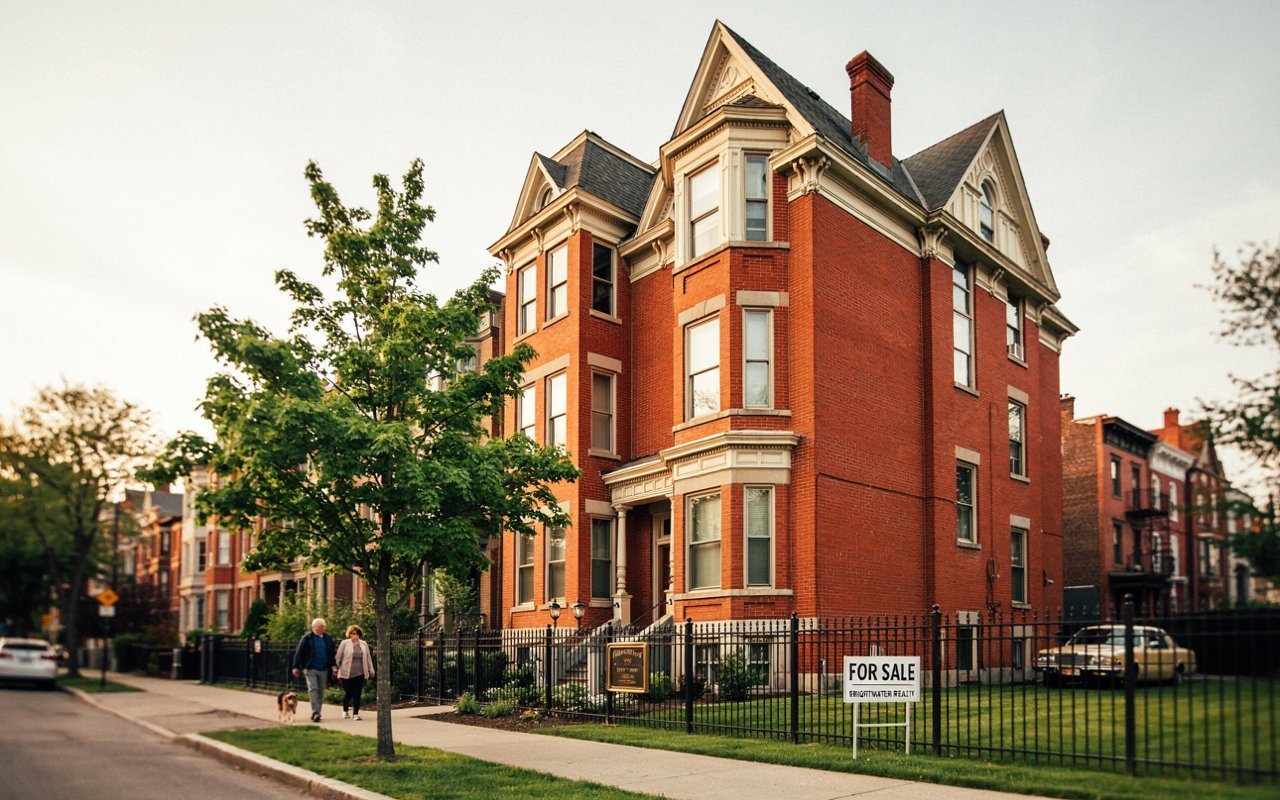
Heritage Home Appraisal in Toronto: How Designation Affects Value
A Victorian semi-detached in Cabbagetown. A Georgian detached in Rosedale. A craftsman bungalow in Leslieville. An Edwardian townhouse on a tree-lined street in Trinity Bellwoods. Many of Toronto’s most sought-after properties sit in neighbourhoods dense with heritage designated homes, and a significant share of their owners do not know exactly what status their property holds or what that status actually means for its value.
Toronto’s Heritage Property Inventory has grown to over 8,000 properties. Approximately 4,500 of those properties are designated under the Ontario Heritage Act. Many others are listed but not designated, a distinction that carries completely different legal and valuation implications. And then there is a third category: properties in Heritage Conservation Districts, where the designation applies to the neighbourhood as a whole rather than to individual properties.
The value question is more nuanced than most owners assume. Heritage designation is not simply a negative constraint on what you can do with your property. For many Toronto homes, it is a contributing factor to why the property commands the price it does. At the same time, the renovation restrictions that come with designation can materially affect what a lender will advance, what an insurance company will cost to replace the structure, and what the property’s highest and best use actually is.
This guide explains the three heritage statuses in Toronto, how designation affects appraised value in both directions, and when a designated heritage property needs a professional appraisal rather than a standard residential valuation.
Listed vs. Designated: The Distinction That Changes Everything
Most homeowners and many buyers use the words “heritage listed” and “heritage designated” interchangeably. They describe different legal statuses with meaningfully different implications.
Listed Properties
Being listed on the Heritage Register means the property is identified as being of potential cultural heritage value or interest, but it has not been formally designated. Non-designated listed properties do not have any protection under the Ontario Heritage Act, except insofar as an owner must give the council at least 60 days’ notice of their intention to demolish or remove a structure. Listing does not trigger maintenance requirements over and above existing property standards, restrict altering any features that do not require a building permit, allow the City to withhold a building permit for non-demolition related alterations, or preclude a property from undergoing renovation or development. Rich by Design Inc.
In plain terms: being listed is a soft signal, not a hard constraint. The practical implication for valuation is that a listed property has fewer restrictions than a designated one, but it sits in a state of regulatory uncertainty. Recent provincial changes to the Ontario Heritage Act through Bill 23 and Bill 200 require that listed properties remain on municipal heritage registers for no longer than two years. Properties must be either designated individually under Part IV of the Act or removed from the Register. The City has embarked on a project to prioritize the nearly 4,000 listed properties, and a subset will be designated individually before December 31, 2026. Toronto
This deadline matters for valuation. Properties currently listed may be designated before the end of 2026 or removed from the register entirely. Either outcome changes the property’s regulatory status and its appraised value. Owners of listed properties are in a position of near-term uncertainty that an appraiser must address directly in any current valuation.
Part IV Designated Properties: Individual Designation
Permission is required for work that involves altering, demolishing, removing, or erecting a building or structure on properties that are individually designated under Part IV of the Ontario Heritage Act. Oba
Part IV designation is registered as a bylaw on title. A buyer, lender, and appraiser will see it when they pull title. The bylaw identifies the specific heritage attributes the designation protects, which might include the front facade, original windows, a distinctive roofline, masonry detailing, or interior elements in some cases. Work that affects those attributes requires a heritage permit from the City before any building permit is issued.
Any exterior alterations affecting these attributes require a heritage permit, including changes to windows, doors, siding, roofing, porches, and even paint colors in some cases. Johnson-team
The key word is “attributes.” A Part IV designated home is not a museum frozen in amber. Most interior renovations that do not affect the identified heritage attributes proceed without a heritage permit. A kitchen renovation, basement finishing, bathroom upgrade, or mechanical system replacement typically proceeds with a standard building permit. The constraints cluster around the exterior elements the bylaw specifies.
Part V Designation: Heritage Conservation Districts
Part V designation applies not to an individual property but to the neighbourhood itself as a Heritage Conservation District (HCD). Toronto has over 20 approved HCDs, including Cabbagetown, Kensington Market, Annex, Rosedale, Wychwood Park, and several others in established residential areas.
Each Heritage Conservation District has an HCD plan that explains the area’s heritage values and the character-defining elements worth conserving. These plans typically include a statement of cultural heritage value, character elements at the lot, building, and streetscape level, and guidelines for alterations, materials, additions, and new construction. Wikipedia
In an HCD, the permit requirements flow from the district plan rather than a property-specific bylaw. In practice, significant exterior alterations visible from the street require a heritage permit under Part V. If your property is in a Heritage Conservation District, any exterior work visible from the street requires a separate Heritage Alteration Permit in addition to a standard building permit. This includes changes to windows, doors, roofing, siding, or any addition that alters the streetscape. City of Ottawa
The valuation implication of HCD status is different from individual Part IV designation. Being in an HCD means your renovation constraints are shaped by the district plan, but you share that regulatory environment with your comparable sales. Every recent sale in your HCD neighbourhood is also subject to the same district rules, which means the HCD’s effect on value is already embedded in those comparable prices. The appraiser is not making a subjective judgment about whether the HCD is positive or negative. The market has already made that judgment through the transactions.
How Heritage Designation Increases Value
The received wisdom in some quarters is that heritage designation always hurts property value. Academic research does not support this view, and neither does the Toronto market.
When asked, the proponents of the view that designation reduces value can point to no research or systematic study that backs up their position. What they do sometimes have is anecdotal knowledge of some particular example. Kimmemyles
The more accurate picture is that heritage designation affects different properties differently depending on the nature of the designation, the neighbourhood, the buyer pool, and the specific constraints it creates.
In established Toronto neighbourhoods where the character and architectural integrity of the streetscape is a primary value driver, heritage designation often supports and reinforces value rather than constraining it. Several mechanisms explain why.
The character premium. Buyers paying $2.5 million for a detached Victorian in Cabbagetown or $3.2 million for an Edwardian in the Annex are not doing so despite the heritage character of those streets. They are doing so largely because of it. The architectural consistency, the mature trees, the scale of the buildings, and the protected street presence are what they are purchasing. Heritage designation is part of what preserves those characteristics against incompatible infill or demolition. For this buyer pool, designation is a feature, not a liability.
Protected neighbourhood character. Heritage Conservation District designation protects an owner’s entire block from the kind of redevelopment that can transform a street’s character quickly. An owner in Wychwood Park or Rosedale who paid a significant premium for the neighbourhood’s distinctive feel benefits from the HCD’s effect on all surrounding properties. Their property’s value is partly supported by the HCD constraining what neighbours can do.
Grant eligibility. Properties designated under Part IV or Part V of the Ontario Heritage Act are eligible for grants equivalent to 50% of the cost of eligible conservation work, with no limit, for tax-exempt properties, through the Toronto Heritage Grant Program. Residential designated properties also qualify for Heritage Property Tax Reduction programs in some circumstances. These financial incentives partially offset the cost of compliant renovation work. Toronto
Prestige and distinction. In the buyer psychology of high-value Toronto real estate, heritage designation often functions as a quality signal. A property with a Part IV designation bylaw registered on title, particularly one with identified and preserved architectural attributes, occupies a distinct position in the market that generic comparables do not capture adequately.
How Heritage Designation Decreases Value
The constraints are real. For some properties, they are material to value. The appraiser’s job is to assess both effects on the specific property being valued, not to apply a blanket rule.
Renovation restrictions reduce highest and best use. The most significant value impact of heritage designation is on properties where the highest and best use would otherwise be redevelopment or substantial renovation. A larger lot with a modest heritage home in a neighbourhood where land values support teardown and rebuild faces a genuine constraint. The designation eliminates or significantly restricts the redevelopment option, which affects the land value component of the analysis. This is where designation most clearly suppresses value relative to what the property would be worth without it.
Cost uplift on compliant renovation. Renovating a designated heritage home to maintain the identified attributes is genuinely more expensive than a standard renovation. Original window replacement with period-appropriate alternatives costs significantly more than standard replacement windows. Heritage-compliant masonry repair requires specific materials and tradespeople. Roofing that matches the original profile and materials carries a premium over standard roofing. Where the cost uplift is material, buyers will factor it in, and it affects comparable sale analysis.
Insurance complexity and cost. Standard home insurance replacement cost calculations are built around contemporary construction. A designated heritage home with original windows, plaster walls, old-growth lumber framing, period-specific brick, and architectural detailing has a replacement cost that may be substantially higher than an equivalent-sized contemporary home. Getting this wrong is consequential. Our insurance appraisal page covers the replacement cost dimension in more depth.
Lender conservatism on some files. Some lenders apply more scrutiny to heritage designated properties, particularly on refinance files where they are advancing against a property with constrained redevelopment potential. The designation does not automatically reduce lending capacity, but it affects the analysis of marketability and liquidation value, which flows into the lender’s risk assessment.
Market depth may be narrower. A uniquely significant Part IV property with unusual heritage attributes may have a smaller buyer pool than a comparable non-designated home. Buyers who want to substantially renovate or redevelop will self-select out. A narrower buyer pool can mean longer days on market and, in some circumstances, a modest market value discount relative to an otherwise comparable non-designated home.
Own a Heritage Designated Home in Toronto and Need an Appraisal?
IPS prepares residential appraisals for heritage and unique properties across Toronto and the GTA. Refinancing, insurance, estate, litigation, and capital gains purposes.
Contact IPS to Discuss a Heritage Property Appraisal
Call +1 (437) 908-0098
How an Appraiser Actually Values a Heritage Designated Home
Standard comparable sales analysis does not adequately capture heritage property values when the designation has a material effect in either direction. A competent appraisal of a heritage home requires several specific analytical steps that are not part of a standard residential report.
Confirmation of designation status and attributes. The appraiser confirms whether the property is listed, Part IV designated, Part V designated, or some combination, and pulls the specific heritage attributes identified in any applicable bylaw. Knowing whether the designation covers only the front facade or extends to interior elements changes the analysis significantly.
Comparable selection with heritage sensitivity. Where comparable sales exist of similar heritage designated properties in the same neighbourhood, they are the most defensible comparables. Where they do not exist or are insufficient in number, the appraiser must select non-designated comparables and make a documented adjustment for the heritage status, in either direction depending on the specific effect.
Highest and best use analysis. The appraiser must determine whether the highest and best use of the property is its current heritage use, or whether without the designation it would be redevelopment. If redevelopment would be the highest and best use but for the designation, the designation imposes a measurable cost that can be estimated from the spread between comparable developable and non-developable lots in the area.
Condition assessment with a heritage lens. An appraiser who holds engineering credentials (P.Eng) has an advantage on heritage files where original building systems, period construction methods, and deferred maintenance on heritage-specific elements need to be assessed. The condition of original windows, heritage masonry, period-specific roofing, and older mechanical systems all affect value and require a knowledgeable assessment.
Insurance replacement cost. For insurance appraisal purposes specifically, the replacement cost on a heritage home must reflect the actual cost of compliant reconstruction using period-appropriate materials and methods. This is a specialized calculation that requires current construction cost data for heritage-grade materials and trades.
Our existing resource on unique residential property appraisal in Toronto covers the broader methodology for properties that fall outside standard comparable analysis, which heritage homes frequently do.
The December 2026 Deadline and What It Means for Listed Properties Right Now
If you own a property that is listed on Toronto’s Heritage Register but not yet designated, 2026 is a material year.
Properties that were listed prior to January 1, 2023 may only remain listed until January 1, 2027. Listed properties that are not designated prior to their expiration date will be removed from the Heritage Register. Wikipedia
The City has embarked on a project to prioritize the nearly 4,000 listed properties. A subset of these properties will be designated individually under Part IV of the Act before December 31, 2026. Toronto
This creates two scenarios for owners of currently listed properties.
In the first scenario, the property is designated before the deadline. The owner gains the financial incentive programs and the prestige of formal designation, but also acquires the permit requirements and constraints of Part IV status. The appraised value may increase or decrease depending on the specific property and neighbourhood.
In the second scenario, the property is removed from the register. The soft constraint on demolition and redevelopment disappears. From an appraisal perspective, this is not just a planning or heritage issue. It is a land value event. For decades, inclusion on the Heritage Register acted as a soft but powerful constraint on development potential. Even without full designation, these listings influenced buyer behaviour, lender appetite, redevelopment feasibility, and ultimately property value. When that constraint disappears, the highest and best use of a property can change overnight. Ipsrealty
For a full analysis of how the removal of heritage listing affects Toronto property values, see our dedicated resource on heritage designation removed and what it means for your property value.
If you own a listed property and are planning to refinance, sell, or settle an estate in 2026, the designation outcome before the year-end deadline is a live variable that an appraiser must address in the current valuation.
When Heritage Property Owners Need an Appraisal
Heritage homeowners face several specific situations where a standard online estimate or a realtor’s CMA is inadequate and a professional AACI-designated appraisal is necessary.
Refinancing. A lender ordering an appraisal on a heritage designated home needs to see that the appraiser understood the designation, confirmed the specific attributes, and applied comparable analysis that reflects the heritage context. A report that ignores the designation entirely or treats it as a simple negative adjustment without analysis will not satisfy a careful underwriting review.
Insurance replacement cost. As discussed above, replacement cost for a heritage home can substantially exceed what a standard calculator produces. An insurance appraisal that accurately reflects the cost of compliant reconstruction protects the owner from underinsurance and the co-insurance penalty. Our co-insurance penalty guide explains how underinsurance works in practice.
Estate settlement. Heritage designated properties in established Toronto neighbourhoods are frequently among the most significant assets in an estate. An executor relying on an online estimate to establish fair market value on the date of death is exposed if CRA later reviews the terminal T1 filing. See our estate appraisal guide for the full picture of when and why estate appraisals are required.
Capital gains on sale. Where a heritage home has been used as a rental or is being sold after a use change, the capital gains calculation requires a defensible fair market value. Heritage properties often require specific adjustments that a generic valuation would not capture, which affects the ACB, the proceeds of disposition, and the resulting tax.
Litigation and disputes. Heritage designation affects highest and best use, which affects value in a way that becomes contentious in partition proceedings, estate disputes, divorce settlements, and expropriation matters. Our property appraisals for legal disputes page covers the litigation context for heritage and complex properties.
Pre-sale due diligence. A seller who wants to understand their property’s true market value before listing, and who wants to verify whether a realtor’s CMA has properly accounted for heritage status, benefits from an independent pre-listing appraisal. Our pre-listing appraisal guide covers this approach in detail.
What Your Heritage Status Means on a Practical Level
A quick reference for owners trying to understand what their heritage status means day to day.
If you are listed but not designated:
Your day-to-day renovation activity is largely unrestricted by heritage rules. You must give the City 60 days’ notice before demolishing. You face regulatory uncertainty about whether your property will be designated before the January 2027 deadline. For valuation purposes, an appraiser notes the listed status and the pending outcome.
If you are Part IV individually designated:
Your identified heritage attributes require a heritage permit before alterations. Most interior renovations proceed with a standard building permit if they do not affect the heritage attributes. You are eligible for heritage grant programs. The appraiser must confirm which specific attributes are designated and reflect them in the analysis.
If you are in a Heritage Conservation District (Part V):
Exterior work visible from the street in your district requires a Heritage Alteration Permit. The district plan governs what is appropriate. Your comparable sales are also in the district, so the HCD effect is already embedded in market values. The appraiser uses comparable sales within the same HCD where available.
If you are unsure of your status:
The City of Toronto’s Heritage Register Map and Heritage Register Search Tool are publicly accessible and searchable by address. Checking your property’s status before commissioning an appraisal helps the appraiser scope the engagement correctly.
Frequently Asked Questions
- Does heritage designation always reduce a property’s appraised value?
No. Academic research and Toronto market evidence do not support the blanket view that designation suppresses value. In established neighbourhoods where architectural character is a primary value driver, designation often supports or enhances value. It suppresses value primarily on properties where the highest and best use would be redevelopment but for the designation, which constrains the land value component. - Do I need a heritage permit to renovate the interior of my Part IV designated home?
Typically not, as long as the renovation does not affect the heritage attributes identified in the designation bylaw. Kitchen renovations, bathroom upgrades, basement finishing, and mechanical replacements generally proceed with a standard building permit. Work that affects the identified heritage attributes, which are usually exterior and architectural in nature, requires a heritage permit before a building permit is issued. - What is the difference between a heritage listed property and a heritage designated property for appraisal purposes?
A listed property carries soft constraints and a 60-day demolition notice requirement, but no permit requirements for most renovations. A designated property has its attributes registered on title by bylaw, with permit requirements for alterations to those attributes. For appraisal purposes, designation is a harder constraint on highest and best use, while listing represents regulatory uncertainty about the property’s future status. - How does the December 2026 listing deadline affect the value of my property?
If your property is currently listed and will be designated before the deadline, it transitions to Part IV status with permit requirements and grant eligibility. If it is removed from the register, the soft constraint on development disappears and highest and best use for some properties may change, potentially increasing land value. An appraiser working a file in 2026 on a listed property must address this pending outcome in the report. - Does heritage designation affect my insurance replacement cost?
Yes, often significantly. Compliant reconstruction of a heritage home using period-appropriate materials and methods is more expensive than standard residential construction. An accurate insurance appraisal for a heritage home reflects the actual cost of compliant reconstruction rather than a generic replacement cost estimate, which protects the owner from underinsurance and the co-insurance penalty. - Can IPS appraise heritage properties for refinancing, estate, and insurance purposes?
Yes. IPS prepares heritage residential property appraisals across Toronto and the GTA for refinancing, estate settlement, capital gains, insurance replacement cost, and litigation purposes. The engineering background (P.Eng) informs assessment of period construction methods, original building systems, and the condition of heritage-specific elements that affect both market value and replacement cost.
This guide was written and reviewed by Ehsan Hassani, an AACI designated appraiser and member of the Appraisal Institute of Canada. IPS prepares heritage residential property appraisals for owners, executors, lenders, and legal counsel across Toronto and the GTA.


