
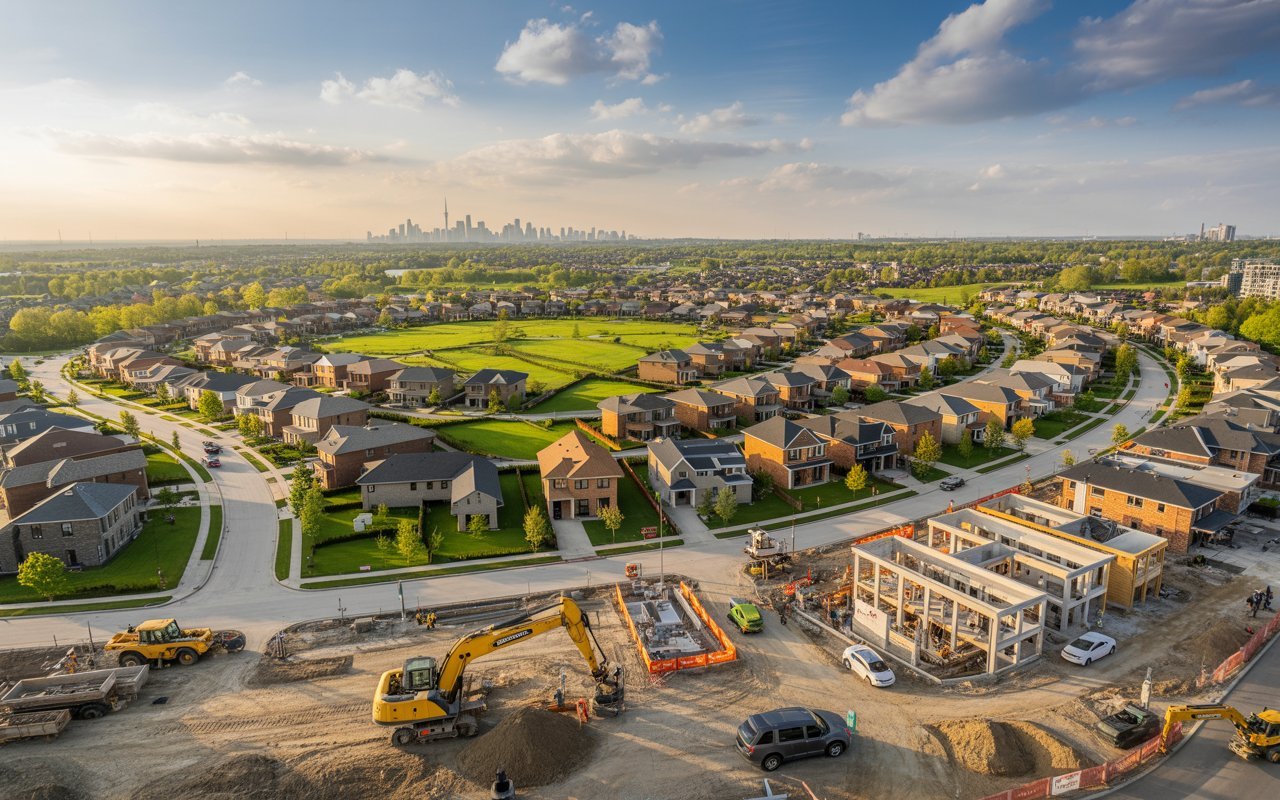
The Death of Development Charges? How New Exemptions for Non Profits and Co Ops Are Reshaping Land Residual Appraisals in the GTA
Across the Greater Toronto Area, development charges have long been one of the largest and most predictable costs built into land valuations. For decades, appraisers, developers, lenders, and landowners treated development charges as a fixed reality that materially reduced residual land value. That assumption is now changing.
With recent provincial and municipal policy shifts introducing development charge exemptions and rebates for non-profit housing providers and housing co-operatives, the financial math behind land development is being quietly rewritten. For certain sites, development charges are no longer a given. From an appraisal perspective, this is not just a cost saving. It fundamentally alters highest and best use conclusions and residual land value outcomes.
At Innovative Property Solutions (IPS), we are already seeing how these exemptions are creating valuation gaps between what landowners believe their property is worth and what it can actually command under revised development scenarios. This article explains how development charge exemptions affect residual appraisals, why traditional valuation approaches may now understate land value, and what GTA landowners should be doing next.
Why Development Charges Have Always Mattered in Land Valuation
Development charges exist to fund infrastructure such as roads, transit, water systems, parks, and community facilities. In the GTA, these charges can easily reach tens or even hundreds of thousands of dollars per unit, depending on the municipality and project type.
From an appraisal standpoint, development charges are treated as a hard cost deducted from projected revenue in a residual land value analysis. The formula is straightforward. Expected revenue minus construction costs, soft costs, financing, profit, and development charges equals land value.
When development charges are high, residual land value is lower. This has historically capped what developers could afford to pay for land, particularly for higher-density residential projects.
What Has Changed With Non-Profit and Co Op Exemptions
Recent housing policy reforms have introduced development charge exemptions or full waivers for specific project types. Most notably, projects developed by eligible non-profit organizations and housing co-operatives may qualify for full development charge relief in many GTA municipalities.
This does not apply to every project. Eligibility depends on ownership structure, affordability commitments, and compliance with program criteria. However, where exemptions apply, the financial impact is substantial.
Removing development charges from a pro forma can increase residual land value dramatically. In some cases, the difference can reach several million dollars on mid to high-density sites.
This is why appraisers can no longer assume a single development charge outcome when analyzing land.
How Development Charge Exemptions Change Highest and Best Use Analysis
Highest and best use is not just about zoning. It is about what use is financially feasible and supported by the market.
Before exemptions, certain sites could not support affordable or non-market housing from a financial perspective. The numbers simply did not work once development charges were factored in. With exemptions in place, those same sites may now support a viable development scenario that was previously infeasible.
This creates a new highest and best use pathway that traditional appraisals may miss if they rely on outdated assumptions.
At IPS, we are increasingly asked to test alternative development scenarios that include exempt uses alongside conventional market uses. The results can materially change the concluded land value.
Residual Land Value Is No Longer One Size Fits All
One of the most important implications for landowners is that residual value is now buyer specific.
A for-profit developer who must pay full development charges will arrive at a different land value than a non-profit or co op entity that qualifies for exemptions. This means land may be worth more to certain buyers than others.
From an appraisal perspective, this requires careful market analysis. The appraiser must consider who the most probable purchaser is and what development path that purchaser can realistically pursue.
Ignoring this nuance can lead to undervaluation, particularly in areas where governments are actively encouraging non-market housing delivery.
Why Some Landowners Are Sitting on Hidden Value
Many GTA landowners still rely on older appraisals or informal opinions of value that assume full development charges apply. In the current policy environment, that assumption may no longer hold.
If a site is suitable for a non-profit or co op development, the land may carry latent value that has not yet been recognized. This does not automatically mean the land will sell for more. It does mean the negotiation landscape has shifted.
A professional appraisal that explicitly models exempt and non-exempt scenarios provides clarity. It allows landowners to understand the full spectrum of value, not just the most conservative outcome.
Appraisal Complexity Has Increased, Not Decreased
While some headlines suggest development charges are disappearing, the reality is more nuanced. Charges still apply to most market developments. Exemptions come with conditions. Programs evolve. Municipal interpretations vary.
This makes professional appraisal more important, not less.
At Innovative Property Solutions, our residual land appraisals incorporate policy review, eligibility assessment, and realistic market assumptions. We do not simply remove development charges from the analysis. We test whether removal is supportable, sustainable, and aligned with how the market is behaving.
Implications for Financing and Negotiations
Lenders are becoming increasingly aware of development charge exemptions, but remain cautious. They still require credible appraisals that explain assumptions clearly and defensibly.
An appraisal that demonstrates how exemptions affect feasibility can support financing discussions, partnership negotiations, and land sale pricing. Conversely, an appraisal that ignores these factors may fail to reflect market reality.
This is especially relevant for landowners negotiating with institutional buyers or housing organizations that are highly sophisticated in their financial modelling.
Why IPS Appraisals Are Different in This Environment
Not all appraisal firms are equipped to handle policy-driven valuation shifts. At IPS, we specialize in complex land and development appraisals across the GTA. We understand how planning policy, housing incentives, and market economics intersect.
Our appraisals are used by landowners, developers, lenders, and legal professionals who need more than a surface-level value opinion. They need insight.
We explain not only what a property is worth, but how that value is derived and how alternative development paths affect it.
What Landowners Should Do Next
If you own development land in the GTA, particularly in areas targeted for affordable or non-market housing, now is the time to reassess value.
Do not assume that yesterday’s development charge assumptions still apply. Do not rely on generalized estimates or outdated reports.
A current, professional residual land appraisal can reveal opportunities, support negotiations, and protect you from leaving value on the table.
Call to Action: Get a Residual Land Appraisal That Reflects Today’s Reality
Development charge exemptions are changing the development landscape and the appraisal landscape along with it. Understanding how these changes affect your land value requires expertise, not guesswork.
Contact Innovative Property Solutions to schedule a residual land appraisal that reflects current policy, market conditions, and highest and best use realities. Whether you are planning to sell, partner, or hold, clarity on value is your strongest negotiating tool.
In a market shaped by policy as much as price, informed valuation is no longer optional. It is essential.


