
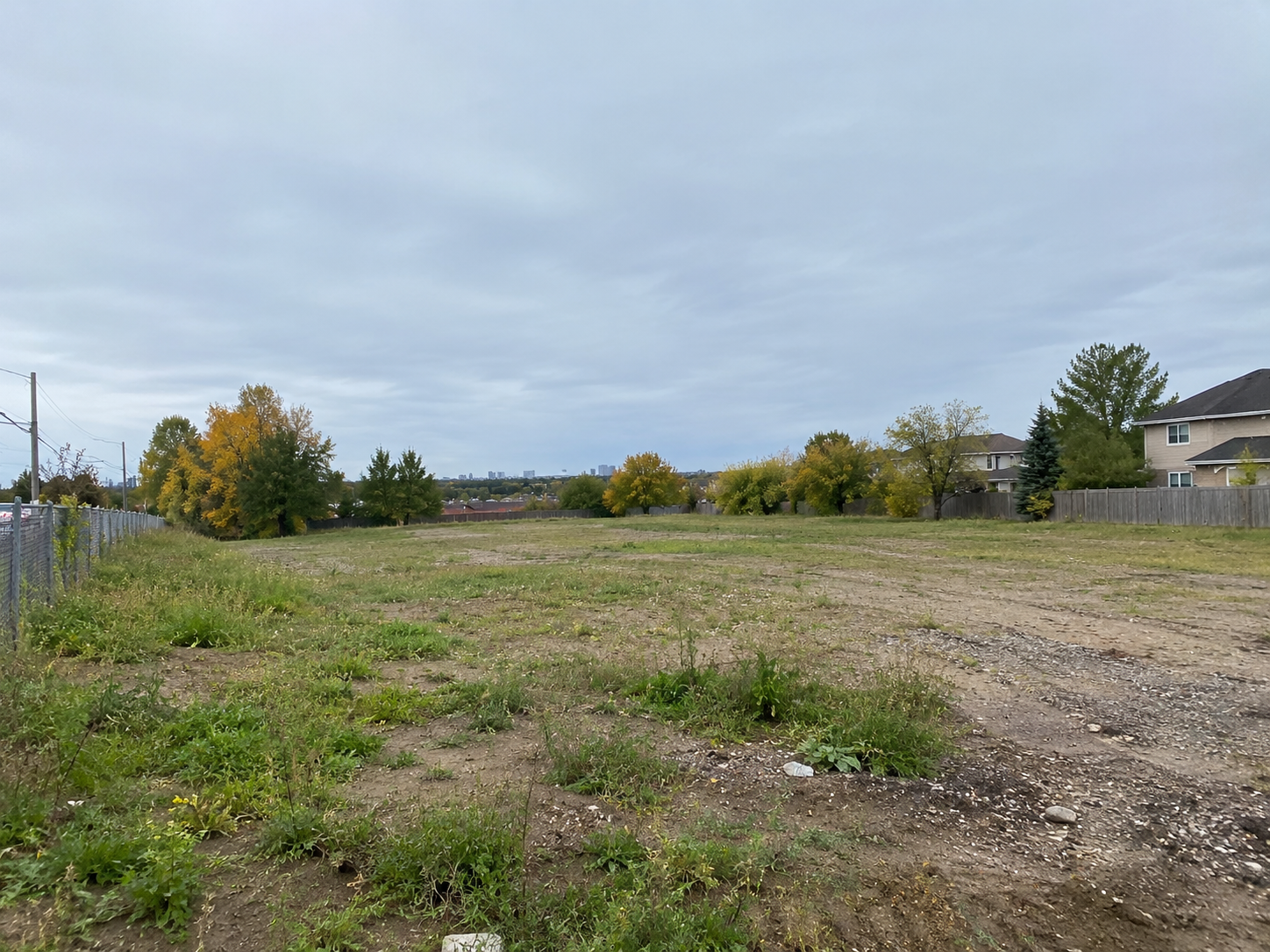
Vacant Land Appraisal in Ontario: How Bare Lots, Infill Sites, and Inherited Land Are Valued
Vacant land is one of the most misunderstood property types when it comes to appraisal. Most people who own a bare lot, an infill site, or a piece of inherited acreage assume the process works the same way as appraising a house. It does not. There is no rental income to capitalise, no comparable sales pool that is easy to navigate, and no building to inspect. What the appraiser is actually doing is evaluating potential and potential is considerably harder to measure than what already exists.
This article explains how vacant land appraisals work in Ontario, what drives value on different types of land, and what you need to know before you order a report. Whether you are dealing with a single infill lot in the GTA, a rural acreage in Simcoe County, or land that has come to you through an estate, the valuation approach differs meaningfully depending on what the land can become.
Why Vacant Land Appraisal Is Different from Every Other Property Type
With a house or a commercial building, the appraiser has something concrete to anchor the analysis. The building exists. It has a size, a condition, a use, and an income history. The market for that type of property is generally active enough that comparable sales are findable within a reasonable radius.
Vacant land strips most of that away. The appraiser must first answer a question that does not come up in residential or commercial work: what is this land actually for? A piece of land in Ontario is worth what someone could do with it. The zoning tells you what is currently permitted. The Official Plan tells you what the municipality envisions for it long term. The surrounding market tells you whether developers, builders, or individual buyers are actively paying for that type of opportunity. And the site characteristics — shape, topography, servicing, access, environmental constraints — tell you whether the permitted use is actually achievable without prohibitive cost.
All of that analysis happens before the appraiser writes a single dollar figure. That is why land appraisal takes longer, costs more per page than a residential report, and requires an appraiser who understands land development economics, not just comparable sales.
The Three Types of Vacant Land That Come Through Most Often in Ontario
Bare Urban Lots and Infill Sites
An infill lot is a vacant parcel within an already-built urban or suburban neighbourhood. These come up for different reasons. A house gets torn down and the lot gets severed and sold. A long-held family property gets listed after decades of sitting unused. A builder acquires a tired bungalow, demolishes it, and sells the bare lot rather than building on it.
In the GTA and surrounding municipalities, infill lots carry value primarily because of what a builder can place on them. A lot in a neighbourhood where detached homes are selling for $1.4 million will attract builder interest because a new custom home on that lot can justify the land cost. A lot in a neighbourhood where townhomes or semis are the dominant form has a different buyer pool and a different value ceiling.
For urban infill, the appraiser’s primary tool is the direct comparison approach: looking at what comparable bare lots in the same area have sold for, adjusting for differences in size, shape, frontage, zoning, and development readiness. Servicing is a significant factor. A lot already connected to municipal water and sewer has a meaningfully lower development cost than one requiring a private well or septic system, and that difference shows up in the land value.
Lot dimensions matter more than people realise. A lot with sufficient frontage to accommodate a semi-detached or duplex is worth more than a lot that can only carry a single detached dwelling. In markets where the density permissions have been broadened by provincial housing legislation, a lot that now allows a triplex or a garden suite creates additional value that did not exist a few years ago. An appraiser working in the GTA market in 2025 and 2026 needs to understand how recent changes to Ontario’s planning framework have affected what is permitted on residential lots, because that directly changes the pool of what the land can produce.
Development Land
Development land is a step above an infill lot. These are parcels where the primary buyer is a developer planning a multi-unit residential project, a commercial development, or an industrial use. The land might be designated for medium or high-density residential in the Official Plan. It might be sitting at the edge of an existing built area with services nearby. It might already have a planning application underway.
Appraising development land requires the appraiser to think like a developer, because the buyer they are valuing for is a developer. That means understanding the land residual method, which works backwards from the value of the completed project to determine what a developer can rationally pay for the land after accounting for hard construction costs, soft costs, financing, profit margin, and carrying period.
If a site can support 80 stacked townhome units selling at $750,000 each, the gross revenue is $60 million. Subtracting construction costs, soft costs, developer profit, and carrying costs leaves a residual land value that represents the ceiling a rational buyer would pay for that site. The appraiser does not simply make up that number — they support each assumption with market evidence and disclose the sensitivity of the conclusion to changes in sale prices, construction costs, or project timeline.
Development land appraisals are also sensitive to planning status. A site with no application has a very different risk profile than a site where a site plan or subdivision agreement has already been approved. The further along the planning process a site is, the lower the buyer’s planning risk, and the higher the land value. An appraiser must understand that spectrum and reflect it appropriately in the analysis.
Inherited and Rural Land
This is the category that generates the most calls from people who genuinely have no idea what they are dealing with. Someone passes away and leaves behind 50 acres in Grey County, or a lot at the edge of a small town in Northumberland, or a farm field that has been in the family for three generations. The heirs need to know what it is worth — for probate, for estate distribution, for a potential sale, or simply to understand what they now own.
Rural and inherited land presents its own set of valuation challenges. Comparable sales in rural Ontario are often sparse, widely spread, and highly variable depending on factors like road frontage, water access, aggregate potential, agricultural classification, and proximity to urban growth areas. A 10-acre parcel in a township with no municipal services and no development potential is a fundamentally different asset than a 10-acre parcel on a regional road within the urban boundary of a growing community.
For estate and probate purposes, the appraisal must establish the value at a specific date, which may be the date of death. This is a retrospective appraisal, meaning the appraiser must use sales data and market conditions that existed at that historical point in time, not current market conditions. This is a legitimate and well-established practice in Ontario appraisal work, but it requires an appraiser who keeps historical data and understands how to reconstruct a market picture from a past period.
How Zoning and the Official Plan Shape Land Value
In Ontario, land value is inseparable from what the land is permitted to become. Zoning controls current use. The Official Plan signals future intent. The gap between the two is where a significant amount of land value gets created or destroyed.
A parcel zoned agricultural but designated for future residential in the Official Plan has speculative value that reflects the probability, timeline, and cost of getting a rezoning approved. That value is real but it is not the same as a parcel that already has the residential zoning in place. The appraiser must weigh that difference carefully and assign probability to the planning outcome rather than simply assuming the rezoning will happen on schedule.
Ontario’s recent changes to the Planning Act, the More Homes Built Faster Act, and various Minister’s Zoning Orders have altered the planning landscape meaningfully in some areas. Urban boundary expansions have been approved in certain regions and reversed in others. These policy changes affect which parcels are development-ready and which are still speculative, and an appraiser working in 2025 and 2026 must have current knowledge of what has changed and what it means for a specific site.
Greenbelt land is a separate category with its own constraints. Land within the Greenbelt Plan area is subject to restrictions that significantly limit development potential in most cases, which in turn suppresses land value relative to comparable parcels outside the Greenbelt. An appraiser must understand those boundaries precisely and apply them correctly in the analysis.
Servicing: The Factor That Changes the Numbers More Than Most People Expect
One of the most common misunderstandings in vacant land valuation is underestimating the cost and value impact of servicing — specifically, the availability of municipal water and sewer, road access, and utilities.
A parcel with full municipal services at the lot line is development-ready. The buyer knows exactly what they are getting and the cost to build is predictable. A parcel where services need to be extended — even from a main that is only 200 metres away — can carry tens of thousands of dollars in servicing costs, and in some cases those costs exceed what the land is worth for its intended use. The appraiser must account for this, either by deducting estimated servicing costs from the comparable sales or by selecting comparables that have a similar servicing situation.
For rural land, the question is not about municipal services but about well and septic. Ontario’s well and septic regulations limit where systems can be placed, how large a footprint they can accommodate, and how close they can be to property lines and water features. A lot that physically looks large enough to build on may have limited usable area once setbacks, well placement, and septic field requirements are mapped out. That reduces the effective development yield, which reduces the land value.
Environmental Constraints and the Appraisal
Environmental constraints are more common on vacant land than on built properties because land is often left vacant precisely because something about it is challenging to develop. Flood plains, wetlands, significant woodlands, endangered species habitat, and steep slopes are all regulated in Ontario under the Conservation Authorities Act, the Planning Act, and various provincial policy statements.
An appraiser will review available mapping from the local Conservation Authority and the municipality to identify any regulated areas affecting the site. They will note what portion of the lot is buildable versus constrained, and they will select comparable sales that reflect similar constraint conditions. A lot with 30% regulated land is a different value proposition than a lot that is 100% developable, even if the total acreage is the same.
In some cases, environmental constraints are so significant that the appraiser must conclude the land has minimal development value and its worth is limited to alternative uses such as a naturalized lot or land held for environmental credit. These situations require careful explanation in the report so the reader understands why the value is lower than they might have expected based on the lot’s listed size.
Specific Purposes That Require a Vacant Land Appraisal in Ontario
Estate and Probate
When a deceased person owned vacant land in Ontario, the estate requires an appraisal to establish fair market value at the date of death. This value is used for probate purposes and for calculating any capital gains tax owing under the Canada Revenue Agency’s deemed disposition rules. The appraisal must meet CRA’s standards and, where the estate is contested or complex, it may need to withstand scrutiny from legal counsel or the courts.
Retrospective appraisals to the date of death are common in estate work. If a parent passed away two or three years ago and the estate is only now being administered, the appraiser will use sales data from that historical period to form an opinion of what the land was worth at that specific date. This is not guesswork — it is a structured analysis using evidence from the market as it actually existed at the relevant time.
Capital Gains Tax Planning
If you purchased vacant land years ago and are now considering selling, you may need an appraisal to establish the adjusted cost base or to document the value at a specific point in time for CRA purposes. This is particularly common for land that was inherited, received as a gift, or held through a corporation where ownership structure has changed.
Sale and Purchase
Before listing vacant land for sale, an independent appraisal gives you a defensible asking price grounded in what the market is actually paying for comparable parcels. Buyers often arrive with their own estimates, and having a professional appraisal in hand from the outset positions you more credibly in negotiations and reduces the risk of accepting an offer that significantly undervalues the land.
On the buyer side, an appraisal before you firm up a purchase gives you confidence that you are paying a market-supported price and not overpaying for a site based on a seller’s optimistic development projections.
Financing
Lenders treat vacant land as a higher-risk collateral type than built property, and their loan-to-value ratios reflect that. Many institutional lenders will only advance 50% to 65% of appraised value on vacant land, and some will not lend on rural land or speculative development parcels at all. A professional appraisal from a designated appraiser is required for any land financing transaction where the lender is a regulated financial institution.
Severance and Consent Applications
When you are severing a lot from a larger parcel and applying for a consent from the local Committee of Adjustment, the municipality may require or request an appraisal as part of the application package. Even where it is not required, having a professional opinion of value on both the retained and severed parcels helps demonstrate that the severance creates a viable new lot, not simply a piece of land with insufficient value to support construction.
Expropriation
If a government authority is acquiring your vacant land under the Expropriations Act, you are entitled to compensation based on market value plus any injurious affection and disturbance damages. Expropriation authorities commission their own appraisals, but you have the right to commission an independent appraisal and to have that appraisal considered in the compensation determination. In many cases, the difference between the authority’s estimate and an owner’s independent appraisal is significant, and having a well-supported independent report is essential to recovering full compensation.
Partition and Family Disputes
Vacant land that is jointly owned — between siblings from an estate, between business partners, or between separating spouses — often requires an appraisal when the owners cannot agree on value and need to resolve the co-ownership through a buyout or court application. The appraisal provides the neutral basis for those negotiations and, if needed, supports a court application under Ontario’s Partition Act.
What the Appraiser Actually Looks At During a Land Inspection
People sometimes assume that inspecting a vacant lot is quick and simple since there is no house to walk through. That is not quite right. A thorough land inspection involves considerably more than standing at the property line and taking a few photographs.
The appraiser will walk the lot to assess topography, noting any significant grade changes, low areas that may indicate drainage issues, and any visible signs of fill or disturbed soil. They will check whether there are existing structures, well casings, old foundations, or other improvements that affect either the value or the environmental status of the land.
They will review road frontage and access, confirm lot dimensions against the survey or reference plan, and note proximity to any regulated features such as wetlands, watercourses, or natural heritage areas. Where the lot borders a conservation authority regulated area, the boundary of the regulated area is identified and the buildable portion of the lot is mapped out as accurately as the available information allows.
For rural parcels, the appraiser will often need to review aerial mapping, Ontario Base Mapping, and Conservation Authority flood plain and wetland mapping before forming conclusions about the site’s development capacity. This desk research is done before and after the inspection, not instead of it.
Common Situations Where Land Value Surprises People
After years of appraising vacant land across Ontario, a few patterns come up repeatedly where the owner’s expectation and the market reality are far apart.
The first is inherited rural land. A family has held a property for 40 years. They remember when it was worth very little, and they assume it has appreciated steadily in value. Sometimes that is true. But in rural Ontario, land that lacks development potential, has poor road access, or sits in an area with no buyer demand may be worth less than the family believes, particularly once the environmental constraints are mapped and the servicing costs are understood.
The second is urban infill lots where the owner has been quoted a high figure by a real estate agent but has not seen the zoning analysis. Not every lot in a high-value neighbourhood can accommodate what the owner envisions. A lot with 25 feet of frontage in a neighbourhood where the minimum lot requirement for a new build is 30 feet has a compliance problem that significantly affects who can buy it and what they can pay.
The third is development land where the owner is valuing the property based on what they believe could eventually be built rather than what the market is currently paying. Development land is priced on risk-adjusted current value, not on optimistic projections of a project that has not been approved and may not be built for five to ten years. The appraiser’s job is to anchor the value in what the current market evidence supports, and sometimes that conversation is a difficult one.
How Long Does a Vacant Land Appraisal Take in Ontario
A straightforward urban infill lot with good comparable sales available typically takes seven to ten business days from inspection to delivery of the completed report. Rural land, development parcels, or estate work requiring a retrospective date of value may take longer depending on the complexity of the research and the availability of sales data in that specific submarket.
Providing the survey or reference plan, any existing planning approvals, and any environmental reports you already have at the time of engagement shortens the timeline. If the property has been the subject of a prior appraisal, sharing that report also helps the current appraiser understand the property’s history and what comparable sales were used previously.
Why You Need an AACI Designated Appraiser for Vacant Land
Vacant land appraisal is not a task well suited to a general residential appraiser who handles the occasional lot assignment. The analysis requires knowledge of Ontario’s planning framework, familiarity with land development economics, experience with the land residual method for development parcels, and the ability to source and verify comparable land sales in a market where those sales are far less frequent than residential transactions.
The AACI designation from the Appraisal Institute of Canada is the standard qualification for complex property assignments in Canada, including all types of vacant land. Lenders require it for financing. Courts expect it for litigation and estate work. CRA recognises it for capital gains purposes. If you are ordering a land appraisal for any purpose that involves a financial institution, a lawyer, or a government authority, the report needs to come from a designated appraiser.
At IPS Realty Appraisals, we complete vacant land appraisals across Ontario including bare urban lots, infill sites, development parcels, agricultural land, rural acreage, and inherited property. Every report is prepared or supervised by Ehsan Hassani, P.App., AACI, P.Eng., MBA, and meets CUSPAP 2024 standards.
Frequently Asked Questions
How is vacant land valued if there are no comparable sales nearby?
When comparable sales in the immediate area are limited, appraisers widen the search to comparable communities with similar market characteristics. Adjustments are made for location, lot size, zoning, servicing, and any other factors that affect value. In some rural markets, the appraiser may also apply the land residual method or an income approach if the land has agricultural rental income or another measurable income stream. Thin comparable sales markets require more judgment and disclosure, not abandonment of the appraisal process.
Can vacant land be appraised for estate purposes after the date of death?
Yes. Retrospective appraisals to the date of death are a standard practice in Ontario estate work. The appraiser uses sales data and market conditions from the relevant historical period to form an opinion of value as at that date. The further back in time the valuation date is, the more challenging the research becomes, but properly qualified appraisers maintain historical data and can support retrospective opinions going back several years.
What is the difference between appraised value and assessed value for vacant land?
Assessed value is MPAC’s mass-appraisal estimate used for municipal taxation, updated on a province-wide assessment cycle. Appraised value is an independent professional opinion of current market value. For vacant land, these figures can diverge significantly — MPAC assessments on rural and development land are frequently either behind current market values in a rising market or disconnected from actual sales in a thin market. If you believe your MPAC assessment is materially inaccurate, a professional appraisal is the most effective evidence for a Request for Reconsideration or Assessment Review Board appeal.
How much does a vacant land appraisal cost in Ontario?
Fees for a vacant land appraisal in Ontario typically range from $1,500 to $4,500 depending on the property type, location, and complexity of the assignment. A straightforward urban infill lot in the GTA with good comparable sales is at the lower end of that range. A rural acreage with development potential, environmental constraints, or a retrospective valuation date will be at the higher end. Contact us with details about your property and we will provide a specific fee estimate.
Do I need an appraisal before selling inherited land in Ontario?
Not legally required, but strongly recommended for two reasons. First, it establishes the fair market value at the date of death, which is needed to calculate the capital gain for CRA purposes and to support the estate accounting. Second, it gives you a defensible basis for negotiating the sale price rather than relying on informal estimates that may significantly undervalue or overvalue what you own. For estates with multiple heirs, an independent appraisal also removes disputes about what the land is actually worth.
Can an appraisal consider future development potential?
Yes, where the development potential is supported by current zoning or Official Plan designations. An appraiser will reflect the land’s permitted uses in the value opinion, including density allowances and any approved planning instruments. Speculative potential that is not yet supported by planning approvals is treated differently — it may be acknowledged as a factor but it cannot be the primary basis for value unless there is market evidence showing that buyers are consistently paying a premium for that type of speculative opportunity in that specific market.


